She rode a bicycle with ribbons in her hair—and a pistol in her pocket.
At the age of fourteen, Freddie Oversteegen had set aside pigtails, braids, and bows in her hair, choosing instead the life-and-limb-threatening risks of becoming a key participant in the Dutch resistance. With the natural beauty and deceptively charming demeanor of youth, she carried messages through occupied Haarlem — and weapons too, often using them to deadly effect. As a teenager, she faced perilous situations with remarkable courage, moving through a city under Nazi control while performing acts that few adults of any generation could imagine.
_________________________________________________________________________________________________
Freddie was born on September 6, 1925, in Schoten, now a neighborhood on the north side of Haarlem, Netherlands. Her father, Jacob Oversteegen, was a physician, and her mother, Trijntje van der Molen, was a politically engaged woman with strong communist and anti-fascist convictions. (Trijntje is a diminutive, probably for Katharina — Trina or Trijna — a nickname given by her parents that stayed with her into adulthood.)
Despite her father’s profession, the family lived modestly, at one point residing on a moored barge in Haarlem and sleeping on straw-stuffed mattresses. It has been suggested that their limited economic means resulted from Jacob’s difficulty maintaining steady employment. The cramped quarters and simple conditions of barge life brought both hardship and a sense of adventure. Combined with her mother’s strong political beliefs, these circumstances shaped Freddie’s early independence, resourcefulness, and inner strength.
In the early 1930s, following her divorce from Jacob Oversteegen, Trijntje van der Molen sought a fresh start for herself and her daughters, Freddie and Truus. She relocated to the eastern Netherlands, to Epe in the province of Gelderland, where she soon met and married a farmer named Volkerink. The family settled on a modest farm, embracing a rural lifestyle that contrasted with their previous urban experiences. This move provided a semblance of stability, though financial challenges persisted.
From 1933 and throughout the 1930s, Freddie grew up in a household deeply shaped by her mother’s anti-fascist convictions. Trijntje, often with the support of her husband, opened their home to those fleeing persecution, especially Jewish refugees escaping the rising tide of Nazi fascism in Germany and Austria, and later some from Poland.
Freddie and her sister Truus witnessed firsthand the risks involved in sheltering those targeted by oppressive regimes, learning lessons about courage, secrecy, and moral responsibility at an early age. The modest farm and household became more than a home — it was a sanctuary and a classroom in resilience, shaping Freddie’s sense of justice and her willingness to act decisively when confronted with danger.
_________________________________________________________________________________
Beginning May 10, 1940, the Nazi Wehrmacht launched a full-scale invasion of the Netherlands, rapidly seizing territory across the country. By May 14, the city of Rotterdam was devastated by aerial bombardment, while German ground forces pressed westward. By the end of May, they were rounding up Jews and political opponents in major cities like Amsterdam. In the eastern provinces, including Gelderland, the ground forces advanced through towns and farms, directly threatening civilians. Recognizing the immediate danger, Trijntje fled west with her daughters, seeking refuge in Haarlem, a city the family already knew. Her husband, Volkerink, was likely to have remained behind on the farm to protect his family’s ancestral lands.[2]
Now back in Haarlem, Freddie and Truus’s vocal anti-fascism and evident courage quickly drew the attention of local resistance leaders, making them prime candidates for recruitment despite their young age. Their prior experiences — growing up in a politically engaged household, helping shelter refugees, and navigating life’s hardships — had already honed the independence, resourcefulness, and moral clarity that the resistance valued. Once recruited, the sisters began carrying messages, smuggling weapons, and participating in daring operations, often exploiting their youthful appearance and seemingly innocent charm to move unnoticed in a city under strict Nazi surveillance.
Together with their red-haired comrade, Hannie Schaft, the sisters joined a shadowy resistance network that risked everything to undermine the Nazi occupiers. They sabotaged railway lines, bombed bridges, and sheltered Jewish families in hiding. Some of Freddie’s most daring missions were deeply personal and hazardous: she often acted as bait. Disguised as an ordinary, innocent teenage girl heading to the market or library, she would entice German officers and collaborators to follow her into the woods, where resistance members lay in wait. In some of these ambushes, she herself delivered the fatal shot, demonstrating a combination of cunning, nerve, and lethal boldness that belied her youth.
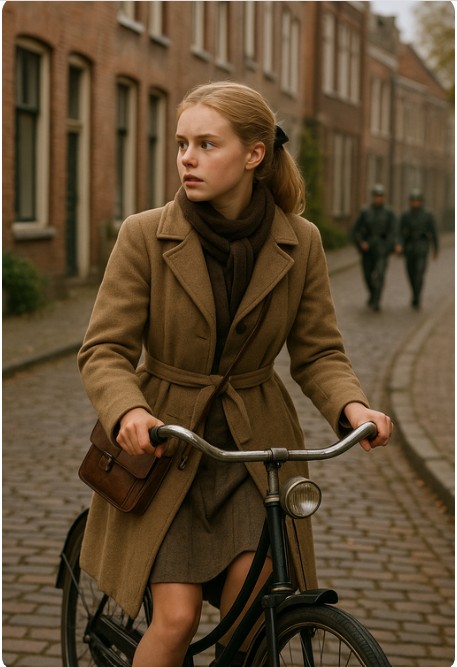
AI generated.
“The trio had developed a routine: First, the girls approached the German officers in bars, flirted with them, and finally asked them if they wanted to ‘go for a walk’ in the woods, where they were then, as Freddie herself said, ‘liquidated.’ “ [3]
On other occasions, the girls approached Nazi soldiers on bicycles, feigning casual passage before opening fire, then relying on the speed and mobility of their bikes to beat a swift and stealthy escape.
_______________________________________________________________________________
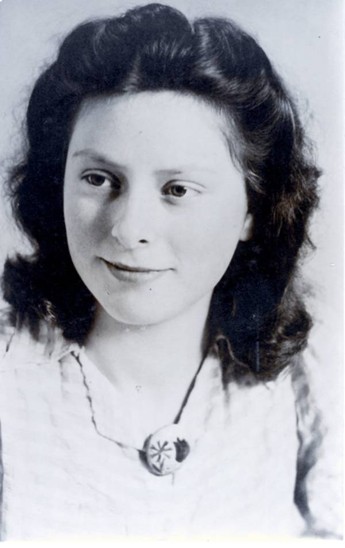
Freddie, post war
After the liberation of the Netherlands in 1945, Freddie and Truus faced the challenge of adjusting to peacetime life after years of high-stakes resistance work. Freddie married Jan Dekker, likely in the late 1940s, taking the name Freddie Dekker-Oversteegen, and together they raised three children.
Over time, Freddie became increasingly engaged in education and activism, determined to share the lessons of courage, moral responsibility, and the dangers of fascism with new generations. She gave interviews, participated in documentaries, and spoke at schools, ensuring the history of the Dutch resistance and its young heroes endured.
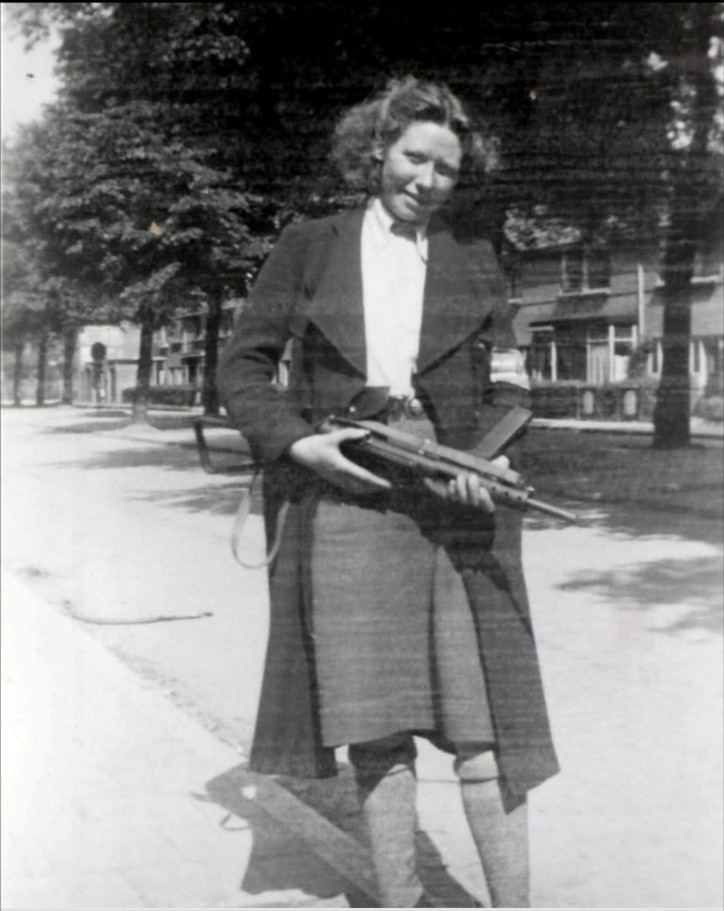
Post-war, staged photo
There were no medals, no glamour, no easy sleep afterward. Freddie would later speak of the trauma—how she had to learn to lock her feelings away, how fear – long suppressed – never truly left her. After the war, she rarely discussed the things she had done, even as her sister became more publicly known. Freddie lived quietly, purposefully, carrying the stories of many who suffered, many who did not survive—and reminding the world that war does not just shape soldiers. It also shapes teenagers with ribbons in their hair and fire in their hearts.
In recognition of their courage and contributions, Freddie and Truus were awarded the War Mobilization Cross in 2014 for their resistance actions during World War II. A street in Haarlem is named for her.
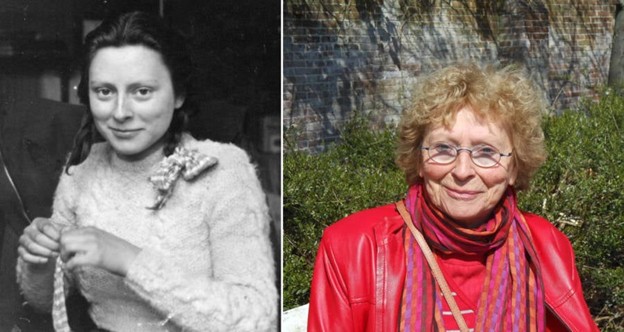
Later years
Freddie Oversteegen passed away on September 5, 2018, one day short of her 93rd birthday, living her final days in a nursing home in Driehuis. She left a legacy of bravery, moral conviction, and resilience that inspires even to today.
History does not always look like a battlefield. Sometimes, it looks like a young girl on a bicycle — ribbons in her hair and fire in her heart: brave enough to fight evil and dodge death with nothing but courage, cleverness, and a cause worth dying for.
__________________________________________________
Joe Girard © 2025
Thank you for reading. As always, you can add yourself to the notification list for newly published material by clicking here . Or emailing joe@girardmeister.com
[1] Shoten is now a northern neighborhood of Haarlem, withing its municipal boundary.
[2] The author presumes the Volkerink, who never formally adopted the two girls, remained in Gelderland, as he largely falls out of her biography at this time (I of course did not check EVERY source … but this appears to probably be the case).
[3] https://ostfriesland.vvn-bda.de/2019/03/09/nachruf-auf-freddie-oversteegen-eine-heldin-des-niederlaendischen-widerstands/
Das Trio hatte eine Routine entwickelt: Zuerst näherten die Mädchen sich den deutschen Offiziere in Bars, flirteten mit ihnen und fragten sie schließlich, ob sie im Wald „spazieren gehen“ wollten, wo diese dann, wie Freddie selbst sagte, „liquidiert“ wurden.
Bonus Notes: All images of Freddie Oversteegen used here are sourced from public domain or Creative Commons (CC0) licensed repositories, including Wikimedia Commons and other freely available historical archives. These images are free to use without attribution or permission.
The name Oversteegen, as in based on the Dutch words, would generally convey the sense of climbing up, and can be interpreted as “to transcend.” However, it is probably a geographically associated surname: someone who lived on the upper lane or rise.