Ice, Rails and Fire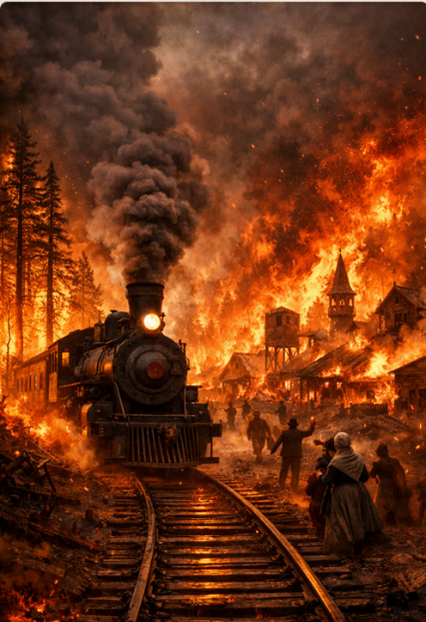
On September 1, 1894, at 1:55 PM, the Duluth Number 4 Limited pulled out of Central Station, steaming south toward Minneapolis. By late afternoon, the sky over the pine forests of eastern Minnesota turned obsidian, as if night had fallen hours too early. In the small railroad town of Hinckley, ninety miles north of Minneapolis, the wind roared through the timber like a furnace draft. Sparks rained from the darkened sky, and the forest erupted into towers of flame. At the throttle of the Limited, engineer James Root—exhausted, overworked, and suddenly surrounded by a thermal catastrophe—would make the decision to send his train backward, directly through a wall of fire.
Foundations in the Hudson Valley
James Root was born in 1843, the first of four children to John and Bridget Root, who had recently emigrated from the political and economic hardships of British-ruled Ireland. He came of age in the Greenbush neighborhood of Rensselaer County, nestled along the Hudson River. This was a world of tenements and toil, populated by a mosaic of laborers from Connecticut, Canada, Wales, Ireland, and Germany. They were the muscle of the young nation: stonecutters, blacksmiths, and the vanguard of the steam age—brakemen and engineers.
The Hudson Valley itself is an ancient corridor, a masterpiece of geological patience carved over millions of years by the retreat of the Laurentide Ice Sheet at the end of the last glaciation. Stretching 150 miles from the Adirondack Mountains to the Atlantic, the valley’s rolling hills and fertile floodplains were the result of cataclysmic ice movements. Long before the tenements, indigenous peoples navigated this deep-water channel; later, in 1609, Henry Hudson’s voyage for the Dutch East India Company opened the region to European settlement. This Dutch influence left an indelible mark on the region’s aristocracy, producing such notable lineages as the Roosevelts and the Van Burens.
By the mid-19th century, this glacial path became a critical artery of American industry. While river transport was reliable, it was seasonal and sluggish. The solution was the Hudson River Railroad. For the Root family, the railroad was both a source of bread and a symbol of modernity. For young James, the locomotives hissing along the riverbank represented a ladder out of the crowded tenements—a chance to master a machine that would define the rhythm of his adult life.
By age fifteen, Root’s formal education was replaced by the grueling apprenticeship of the rails. He began at the bottom, sweeping engines, hauling coal, and “learning the rhythms of the steam machinery by observation.” He worked through scorching summers that could buckle rails and bitter winters where fingers could flash-freeze to iron. He learned the nuances of the throttle and brake, and the “invisible” skills passed down by mentors: how to read the tracks, sense the wind, and anticipate mechanical failure.
The Labor of the Line
Following the Civil War, in which Root served, the nation’s expansion drew men like Root westward toward the Upper Midwest. Root went first to Dansville, in central upstate New York, working on the new Dansville and Mount Morris Railroad. He then moved to Minnesota, finding employment with the St. Paul & Duluth Railroad, running a line that marked a transition zone between the deciduous “Big Woods” of central and southern Minnesota and the coniferous North. While the Great White Pine was indeed the crown jewel—prized for its massive, straight trunks and lightweight strength—it was part of a broader timber economy.
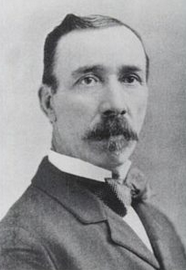
James Root, circa 1894
The St. Paul & Duluth line was in many ways a biological and geologic boundary. Heading north out of St. Paul, the train passed through the rolling, fertile Big Woods — the great deciduous forest of oak, elm, and maple that blanketed central Minnesota. But mile by mile, the hardwoods thinned and gave way to something older and wilder: the boreal North, where thousands of glacial lakes glittered between ridges of spruce, tamarack, and the towering white pine. Root rode this transition every run, from farmland to frontier, from the settled South to the raw, volatile North.
But this bounty of timber created a deadly liability. Logging produced “slash”—the discarded waste of the harvest. While pine needles provided a “flash-fuel,” heavier hardwood debris created deep, long-burning “hot spots.” By late August 1894, the entire regional ecology had been reduced to a singular, volatile state of dehydration. Normally moist soil crinkled and cracked under simple footsteps. Railroaders still remembered the 1871 firestorms that leveled Chicago and Peshtigo; the summer of 1894 mirrored that climatic harshness. Temperatures through August hovered in the 90s, while relentless winds sucked the remaining moisture from the soil until the forest was a powder keg.
The Descent into the Maelstrom
September 1, 1894, dawned with a deceptive, heavy calm. By late morning, the air shimmered with a heat haze that signaled a shift in barometric pressure. As the Limited pressed south toward Hinckley, the atmosphere underwent a terrifying transformation. The smoke thickened into an impenetrable wall, turning the afternoon into midnight. Root pushed the train past the Hinckley station—as a “Limited,” it was not scheduled to stop—scouting the line further south. He drove the Duluth Limited south from Duluth; the engine chugged steadily through the hazy timber.
He was quickly met with a nightmare: the fire ahead was no longer a terrestrial forest blaze, but a “crown fire” jumping through the treetops fed with oxygen by a gale. The conflagration was sucking up air so quickly it roared. Realizing the southern trestles were likely already charcoal, Root made a decisive, life-saving maneuver. He threw the locomotive into reverse, backing the train into the Hinckley station as a wall of 2,000°F heat pressed in from the south. Further north the glaciers had left far more lakes and depressions. He remembered a marshy lake.
The scene at the station was a portrait of human desperation. Hundreds of panicked residents, many already nursing serious burns, swarmed the coaches with cloth covering their noses and mouths. Once the platforms were cleared of the human sea, Root began the desperate six-mile sprint backward toward the marshy lowlands of Skunk Lake.
The journey was a descent into a literal maelstrom. The heat became so absolute that the cab’s glass windows and sight-feed lubricators (the glass tubes used to monitor oil flow to the cylinders) shattered from thermal shock, spraying the cab with jagged shards and scalding steam. Root was struck in the neck and forehead, yet his hands remained on the throttle. The air in the cab nearly vanished, replaced by a searing, toxic draft that threatened to liquefy the crew’s lungs.
As the temperature skyrocketed, the tin-lead solder in the brass fittings and gauges reached its melting point. The liquid metal began to run down the boiler backhead, and the engine’s controls began to deconstruct under the intense thermal load. Would the boiler even hold? Root drifted in and out of a heat-induced stupor, his consciousness flagging. Each time he slipped toward unconsciousness, his fireman, John McGowan, drenched him with water—which by then was near boiling itself—to shock him back into the fight.
The Sanctuary of the Mud
When the train finally reached the stagnant, muddy sanctuary of Skunk Lake, Root was slumped over the controls, his blistered hands nearly fused to the iron. He had steered 300 souls through a literal hell. While over 400 people perished in the region that night, those aboard the Limited scrambled into the waist-deep mud and silt of the lake, shielding their faces as the crown fire leaped over the water. Root was eventually pulled from the scorched cab by McGowan and fellow railroaders, nearly dead from thermal exhaustion but having successfully cheated the inferno of hundreds of lives.
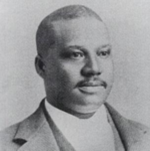
Porter John Blair
As people climbed from the train at Skunk Lake, Porter John Blair assisted them and made repeated trips back to the burning coaches to rescue children. He was the last one to leave the doomed train when he was certain all passengers were off.
Legacy
Afterward, Root continued as a locomotive engineer. The memories and injuries remained; a perpetual mark. Newspapers and communities recognized his heroism. Today, a museum in Hinckley commemorates the event and the heroism of Root and the entire railroad crew. When honored publicly he simply said “I only did my duty.”
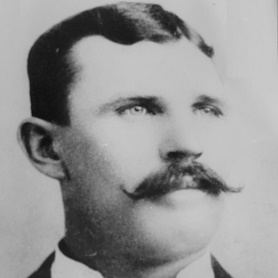
Engineer John McGowan
Afterward, Root was nominated for a Congressional Bravery Medal, the Railroad gave him a gold watch and chain, and a New York theater company paid him $1,000 (about $38,000 today) to appear in a production.
Not much else is known of James Root’s later years.He died in 1911 in New York City, but his burial was in Minnesota where he was still revered. In 1868 he married Ella Fox; they had one child, Edward James Root. Both preceded him in death, his son passing at only 28-years old in 1899.For the vast majority of his life, Root was devoted to the railroad and the communities he served. His legacy endures: skill, bravery, and selflessness. He was an ordinary man facing extraordinary danger who acted with quiet heroism. From the crowded tenements of Greenbush along the Hudson River to the blazing pine forests of Minnesota, James Root’s life was shaped by rails, steam, skill, and an unbreakable humanity.
Joe Girard © 2026
Thank you for reading. As always, you can add yourself to the notification list for newly published material by clicking here . Or emailing joe@girardmeister.com
Note: overworked. From the beginning, railroad employees were severely overworked–such was the demand for the transportation convenience, and the dearth of talented employees to keep up with the railroads’ volcanic growth in these decades. Accidents too numerous to count have been attributed to this gross managerial oversight.
Some resources:
https://www.inforum.com/news/the-vault/railroaders-raced-through-sea-of-flames-to-rescue-hundreds-amid-the-1894-great-hinckley-fire