Tag Archives: Pittsburgh

Abbie-Heroine of Iron

Abbie, Heroine of Iron
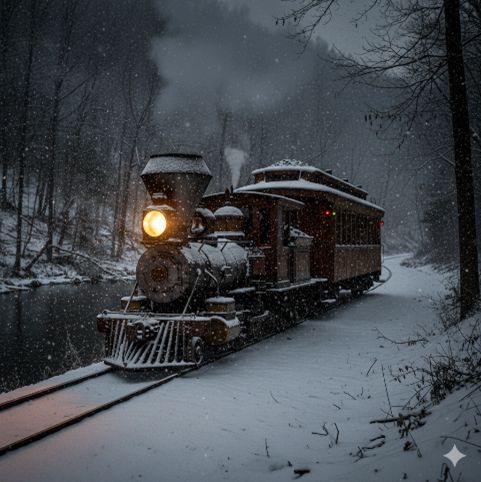
On a frigid December night in 1862, with single-digit air borne on the winds of a howling blizzard, a seventeen-year-old girl held the fate of the Union in her frostbitten hands. Inside the small station at Port Perry, Pennsylvania, the telegraph sounder began clicking frantically—a staccato rhythm of pending doom for Lincoln’s top generals. Before the last “clack” of the message finished, Abbie Gail Struble was out the door.

__________________________________________________________________________________________________________________

Abbie Gail Struble was born on April 22, 1845, in Perrystown, PA, the third of eight children born to George Lewis Struble and Margery (Gregory) Struble.

Perrystown, situated some 12 miles southeast of Pittsburgh, was founded in 1790 by John Perry, its location chosen for the convenient confluence of Turtle Creek with the Monongahela River.  From there farmers could ship their grains, and loggers could float their timber, down to Pittsburgh. And from there, perhaps even as far as New Orleans.  But these were low-capacity flat bottomed boats: the river was too mercurial, going from a lazy shallow stream to bellowing beast in the spring. The low-draw boats could make it through the shallows, and over rocks—with a skilled pilot.

The 1836 charter of the Monongahela Navigation Company presaged the end of Perrystown’s isolation. By 1841, the completion of the second of seven planned locks transformed the quiet settlement of eight families into Port Perry. The river was no longer a shallow obstacle; it was a highway for deeper-draw vessels plying the waters in both directions.

While the Monongahela Navigation Company was taming the water with hand-hewn stone [1], a different kind of current was arriving in Allegheny County—the telegraph.

In 1845, the year of Abbie’s birth, the first commercial telegraph poles were already marching across the American landscape. It had been just one year since Samuel Morse tapped out his historic first message, “What hath God wrought?” By the time Abbie was old enough to walk the wharves of Port Perry, the rhythmic “clack” of the telegraph was already competing with the roar of the riverboat whistles and the thump of paddle wheels.

This new technology soon found its permanent partner in iron. In 1851, the Pennsylvania Railroad reached the town, hugging the riverbanks leveled by the Navigation Company’s earlier work. To maintain a level grade, the tracks followed the river’s bend, along the right bank, downstream toward Pittsburgh, at one point piercing a rugged hillside via a dark, narrow tunnel. The rails and the telegraph arrived as a pair; in those early days, one simply could not exist without the other.

Abbie’s father, who went by Lewis, arrived from Germany in 1836 as a healthy young man. Drawn to Port Perry’s labor market, he spent his early years as a “Laborer” on the river navigation works and the wharves. Eventually, he became a “pilot,” mastering the seasonal currents and hidden rocks of “the Mon.” When the PRR arrived, Lewis saw a way out of backbreaking labor. He mastered the telegraph code and was hired by the railroad. [2].
Telegraph Sounder

Lewis didn’t just learn the code; he brought it home. Because of the job’s importance, telegraphers often lived in or alongside the station. In the crowded Struble household, the staccato rhythm of the telegraph became a second language. While other girls practiced needlepoint, Abbie and her sister Madge (younger by two years) mastered the “sounder.”

At the time, most operators were still “readers”—they relied on a machine to emboss the code onto long strips of paper tape, which they then transcribed into letters, then into words. But the Struble girls were “hearers.” They developed the rare ability to translate the metallic clicks made by a sounder, essentially a metallic bell, into English in real-time, purely by ear. This skill made them faster, more accurate, and—by the time the Civil War arrived—indispensable. [3]

In 1861, Abbie and Madge, and close friend Anna Bellman, went off to the Pittsburgh Female School (now Chatham College) to get official training and certification in telegraphy.

There was great reluctance to hire women as telegraphers.  But eventually many were hired: the need for telegraphers trumped the issue of gender. Soon the PRR hired Lewis’ two gifted daughters.  They all worked at the telegraph station and house – keeping it manned 24/7.

By mid-December 1862, the Union was bleeding out. The year had begun with hope for a quick resolution, but the reality was grimmer. A string of losses was followed by the Pyrrhic victory at Antietam—the deadliest day in American military history, a slaughter that left the Army of the Potomac shattered. [4]

Seeking a turning point, President Lincoln pressured his newly appointed head of the Union Army, Ambrose Burnside, to be more aggressive. Burnside obliged, launching a massive assault against Confederate forces at Fredericksburg, Virginia, on December 13. It was a disaster in every regard. Despite possessing far superior numbers in troops and cannons, Burnside blundered, sending his men into a meat-grinder. The Union suffered twice as many casualties as the Confederates. By the 15th of the month, Burnside and the remnants of his army withdrew, a movement that sent ripples of panic and reorganization northward through the rail hubs of Pennsylvania.

News of the loss devastated moral across the north, from the military, to the government and especially to the public, who nearly lost all faith in the effort … and in Lincoln.

The Strategic Pivot: the Generals went North, to Pittsburgh

The disaster at Fredericksburg had done more than just deplete the Union’s ranks; it had paralyzed the Eastern Theater. With the Army of the Potomac in shambles and the Baltimore & Ohio Railroad—the Union’s primary southern artery—clogged with wreckage and vulnerable to Confederate bushwhackers, the North was forced to pivot. Pittsburgh became the essential “Safe Harbor.” Situated safely behind the Allegheny Mountains, it was the only major industrial hub that could refit an army without fear of Lee’s cavalry. High-ranking generals and their staffs were pulled north to Pittsburgh to coordinate the “Westward Shift,” as Lincoln began to look toward the Mississippi River and the rising star of Ulysses S. Grant to salvage the war effort.
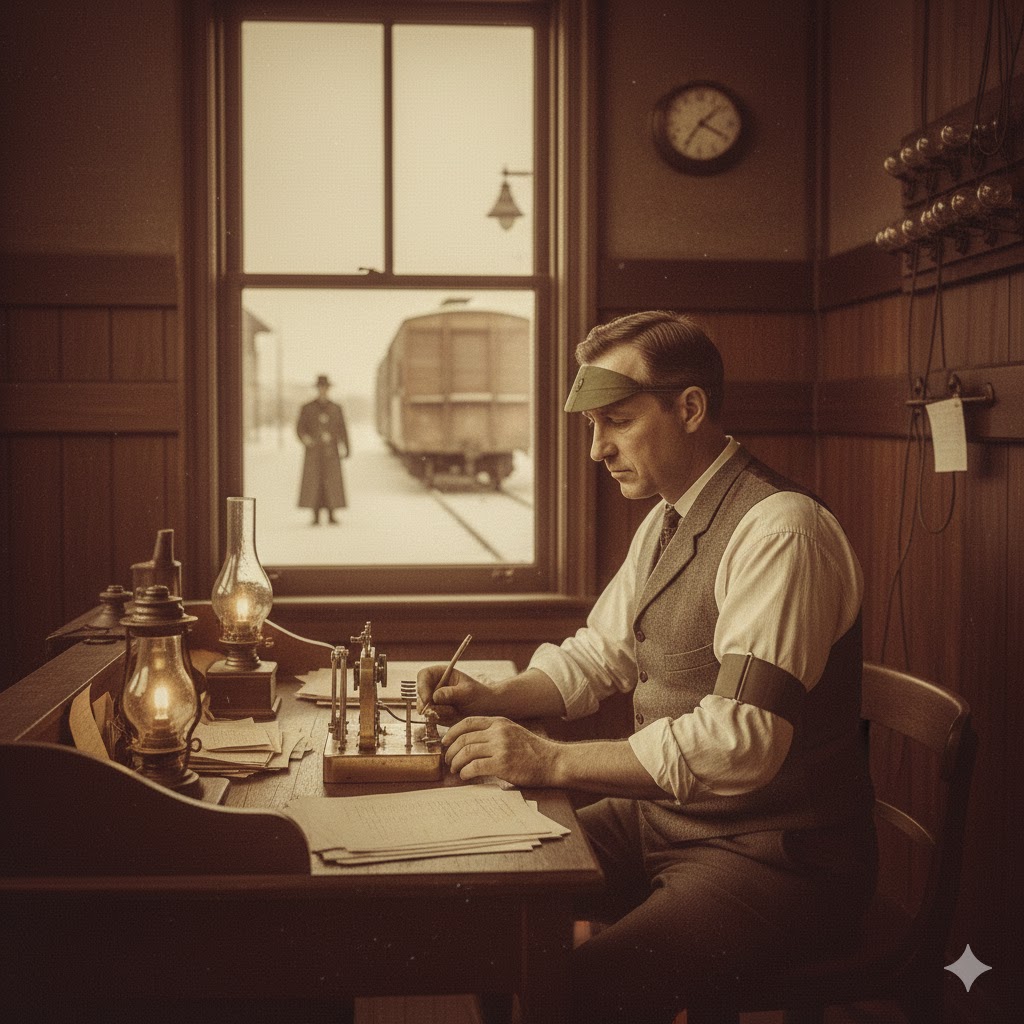
telegrapher in small rail station

Beyond strategy, there was the sheer gravity of the “Iron City.” Pittsburgh was the Union’s arsenal, producing the massive Rodman cannons and the iron plating for the river monitors that were winning the war in the West. In December 1862, the rail lines through Port Perry were thick with “Military Specials”—ghost trains carrying generals for secret war councils at the Monongahela House or overseeing the emergency transport of heavy artillery. These trains moved with a frantic, unlisted urgency. They were the “invisible” traffic of the war, and on a single-track line, invisibility brought potential for catastrophe.

The Monongahela House was the premier hotel in Pittsburgh; it became the “situation room.” Burnside, Grant and many top generals stayed there. Even Lincoln visited once, in February 1861, on his way from Illinois to his inauguration.

Military traffic was heavy through tiny Port Perry: troops, armaments, iron.  And of necessity, so was the telegraph traffic. The Struble girls were often privy to very classified information as they read and relayed important telegrams.

Many of the military trains were “ghost trains”, born from the need for secrecy they weren’t shown on any schedule. They were called “Extras”.  Telegraph was sufficient to notify stations along the way, often with little warning, that the track must be cleared using sidings and switch yards at stations. Such was the status of the late December train headed for Washington, carrying all of the Union’s top generals who had been urgently summoned by President Lincoln.

________________________________________________________

Nothing—not a train nor any packet of information—went through Port Perry without at least one of the Strubles knowing it. They were now an extremely critical link in the battle to end slavery and keep the young nation of 86 years united.

On a bitter cold December night Abbie received a message that a locomotive carrying a single car had rumbled out of Pittsburgh, carrying the generals and top officers to an emergency conference with the President.  An extra.  A ghost train.

As researcher Chris Enss writes:

“At the same time, a west bound freight train pulled into the depot
fifteen miles east of Port Perry. The conductor of the west bound train
entered the telegraph office and asked for track clearance to
Pittsburgh. The message was relayed to the train dispatcher, and the
‘all clear’ reply came back.”

All seemed as it should be as the freight train departed toward Port Perry. It chugged steadily into the storm, a heavy chain of iron pushing through the gale and snow. Though the blizzard forced a cautious pace and choked the engineer’s view with snow, the train’s burdensome weight gathered a cold momentum as it pushed along the tracks bordering the river.

Unexpectedly, Abbie heard the sounder clacking frantically—a frenzied message from the dispatcher who had given the “all clear” just minutes before. He had only just learned of the ghost train from Pittsburgh. It was too late for him to intervene; he could only hammer out a desperate warning down the wire.

A head-on collision was imminent.

Abbie didn’t hear clicks or individual letters—she heard words. Every second saved by her “hearing” was invaluable. She looked out the station window and realized she had only heartbeats to act. Through the swirling snow, she saw the freight train’s headlight already cutting through the station yard. No use and no time to put up the station’s stop signal.

—–

Abbie plunged into the blizzard, the brutal cold and wind shocking her senses, snatching her breath. She sprinted along the snowy platform, matching her stride to the train’s grinding pace before she leaped. Her fingers locked around an iron “grab bar” at the front of the first boxcar, just behind the tender. The train jerked her violently, nearly tearing her arms from their sockets. Though the iron was slick with ice, she held fast, kicking for balance as the locomotive pulled her away from the safety of the station and into the dark.
Creeping Freight
Even in clear weather, trains often slow to a crawl near stations and yards to navigate switches and signals, even when there is no stop scheduled. When heavy snow hits, visibility and friction drop sharply. Engineers must then drop to a “Restricted Speed”—often under 5 mph—ensuring they can stop within half the distance they can see, an operational requirement.

With herculean determination, she swung her weight toward the ladder, her boots scraping for purchase against the vibrating iron. Hand over hand she went, up the rungs. At each rung her fingers flash-froze to the metal, pulling off flecks of skin with each release, but she didn’t slow. The biting cold was now a part of her, a raw and bloody price for every desperate inch.

Her path to the engineer was blocked by two daunting barriers: the yawning, shifting gap between the box car and the tender heaped with frozen coal. As the train banked along the river’s curve, the coupling between the boxcar and the tender groaned and clattered—a jagged jaw of moving metal that threatened to swallow her. Second, how to get across the mound of coal in the tender.
Author note
While the specific mechanics of Abbie’s transit from box car to across the coal tender are not detailed in contemporary accounts, they are creatively synthesized here based on the physical layout of the 1860s rolling stock and the known outcome of her arrival in the engine cab.
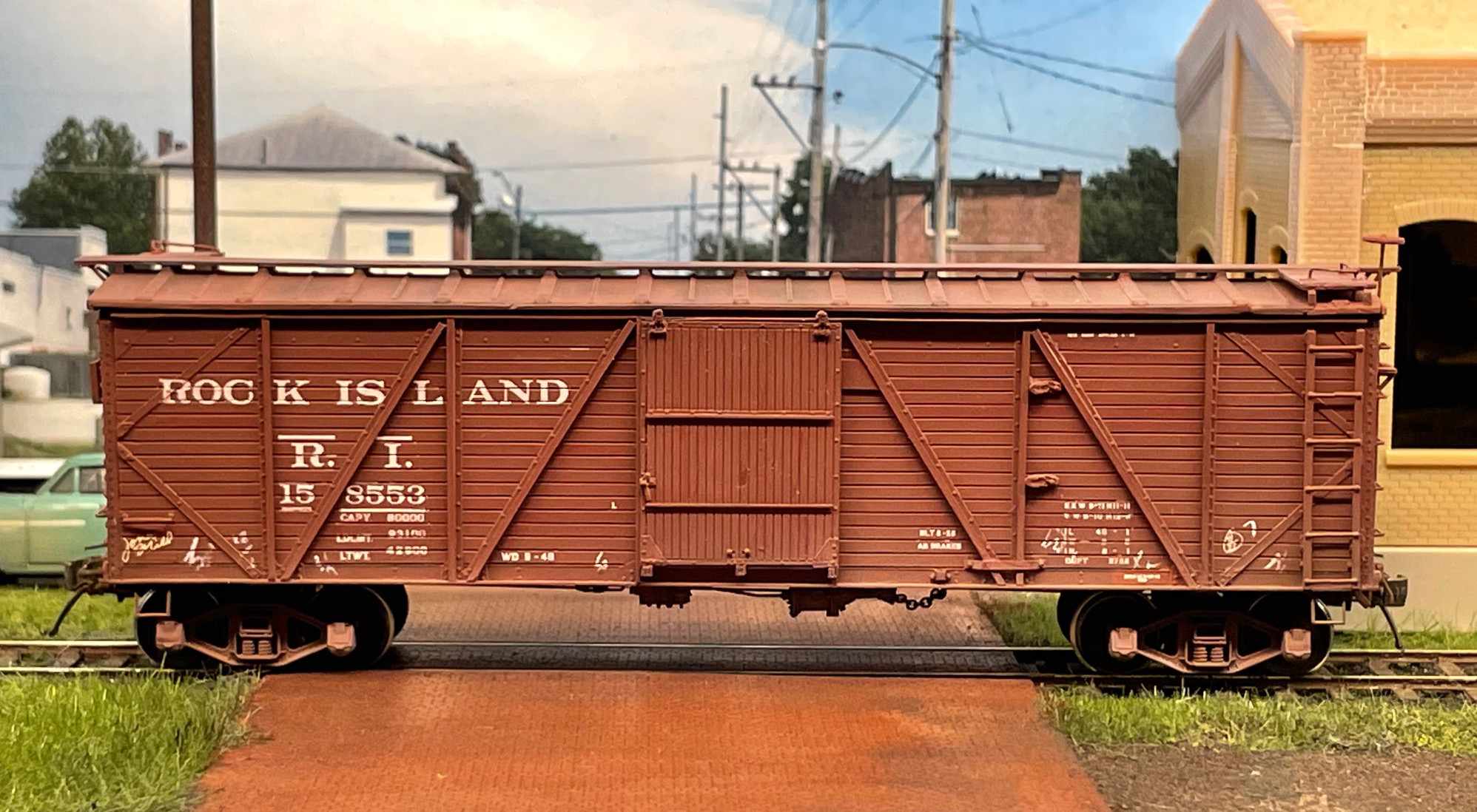
Box car–ladder and rungs at one end

This region of the train was one of the most vibrationally violent. Even with the locomotive moving slowly due to reduced visibility, the heavy cars groaned as they followed the river’s turns. They didn’t just roll; they lurched and shuddered, turning the simple act of standing into a fight for survival.

Tenders of that era had a ladder at their aft end—a vertical string of iron “stirrups” set off-center. Abbie edged to the far fore of the boxcar rungs, the freezing wind whipping her skirts as she prepared for the leap. Trailing soot and sulfurous smoke from the locomotive choked her, but her focus remained sharp.

With her left hand anchored, she reached out diagonally, her right arm and leg fully extended over the “jaw” of the coupling. The gap to the tender stirrups was a terrifying three-and-a-half-foot void of rushing darkness and vibrating iron. With courage beyond imagination, she released her certain grip on the boxcar and threw her
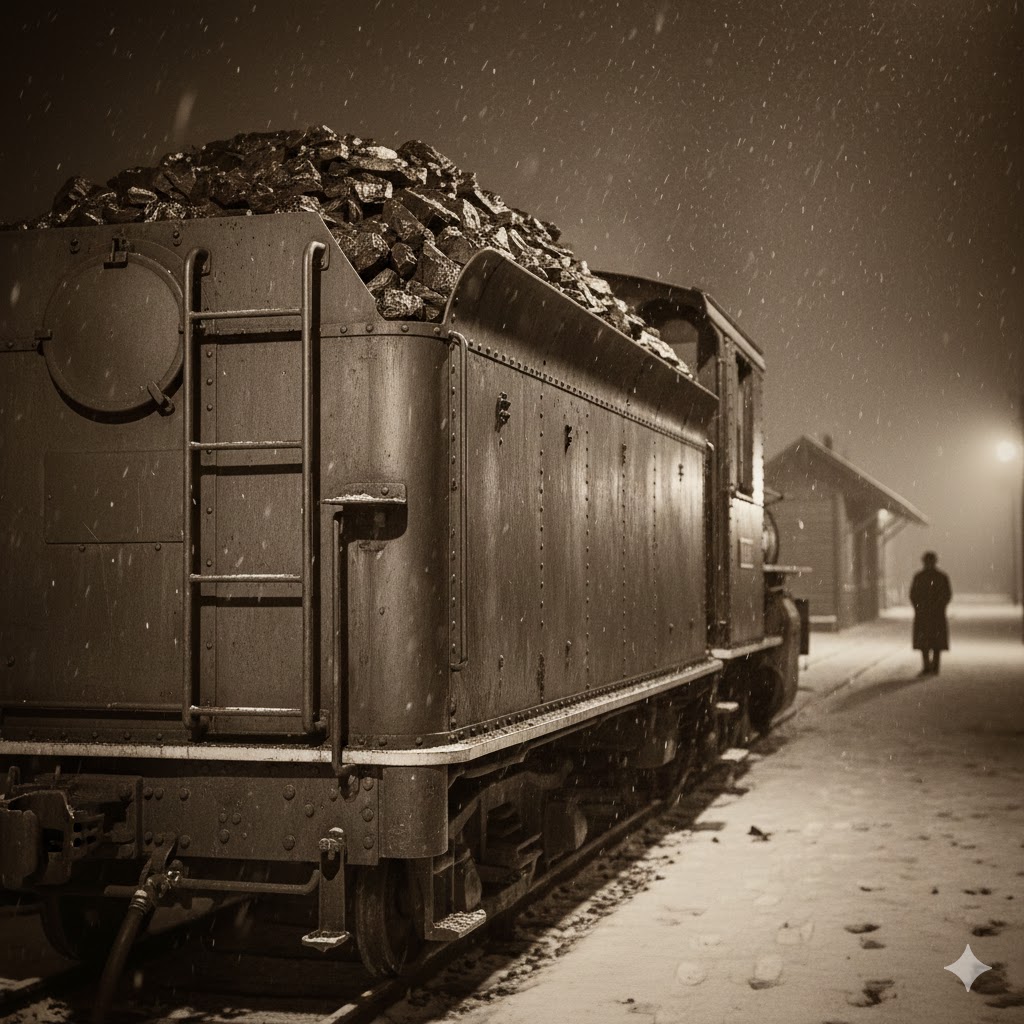
1860s Tender with rear ladder

weight into the storm, her fingers clawing for the icy rungs of the tender.

With frostbitten, de-skinned fingers, Abbie reached the top of the tender. The coal was heaped high and slick with snow. Just as she pulled herself over the edge, gaining some traction on the coal, a tremendous whack struck her leg, nearly pitching her into the fatal oblivion of the tracks below. It was the “tell-tales”—the heavy, knotted ropes hanging from the gallows-arm above—warning that the train was entering the tunnel.

She dropped instinctively to a crawl as the world vanished into a suffocating, pitch-black void. Inside the tunnel, the locomotive’s smoke was trapped, funneling directly into her lungs while tiny hot cinders stung her face. She scrambled blindly over the frozen mounds, the sharp corners of coal piercing her raw palms and knees. Every breath was a struggle against the soot, yet she pushed forward until she reached the tender’s foremost end, where the orange glow of the firebox finally flickered through the dark.

From the station door to the front of the tender had taken twelve grueling, painful minutes.

Below her, two firemen labored in the “hell-gate” of the footplate—blistering hot from the furnace on one side, literally freezing from the blizzard on the other. Abbie was at her physical limit, her strength spent. She tried to scream, but the cacophony was absolute: the rhythmic pounding of the cylinders, the grinding of the massive drive wheels, the rattle of the links, and the roar of the storm swallowed her voice.

In desperation, she grabbed a frozen lump of coal and hurled it.

“What the—?” A fireman recoiled as a chunk of coal struck his shoulder. He looked up, expecting a shifting load, but found instead the ghost of a frozen girl peering down from the rim of the tender. Through frantic, blood-smeared gestures, she signaled the danger ahead. Startled, he reached up and hauled her down to the vibrating floor, where the heat of the firebox met her frozen resolve. It was only then, as she gasped for air, that they learned the true urgency of her mission.

The engineer threw the heavy Johnson Bar into reverse. Despite the slick rails, the train ground to a halt; their cautious speed through the blizzard had left them with much less momentum than if the weather had been fair. He opened the “sander,” dropping just enough grit onto the iron rails to find the static friction needed to get purchase, and retreat.
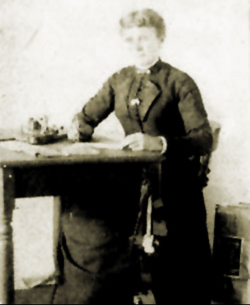
Abbie, later years, perhaps early 1900s

The locomotive pushed backward through the storm as fast as the engineer dared, covering nearly 2 miles back to Port Perry in a desperate race against the clock. He knew track was clear; and made good time. As they entered the station yard, a crew man climbed down and pulled the switch. The train moved to a sidetrack, then the switch was reversed. A few minutes later, the express train carrying Lincoln’s generals whooshed by—a ghost of steam and metal heading east toward Washington.

Abbie’s unique talent—her ability to “hear” the words in the sounder while others were still transcribing—had bought her precious seconds. If not for that, she wouldn’t have caught the first box car, and her scramble to the engine cab would have been taken too long, and probably impossible.

But that skill would have been meaningless without her staggering bravery and athleticism. In excruciating pain, lungs filled with smoke, snow and charcoal dust, and in the very face of death, Abbie Gail Struble had saved the leadership of the Union Army. It is a chilling exercise to imagine the course of the Civil War had she stayed by the warm stove in the station.

____________________________________________________________________________

On May 24, 1866, Abbie married a telegraph lineman named John Vaughan. Under her expert coaching, John mastered the art of reading the sounder, and together they joined the great westward expansion of the railroads. Their skills took them across the continent—from the plains of Texas to the Mexican National Railroad and many other locales—as they raised five children. In a fitting tribute to their mother’s legacy, all five went on to become telegraphers.
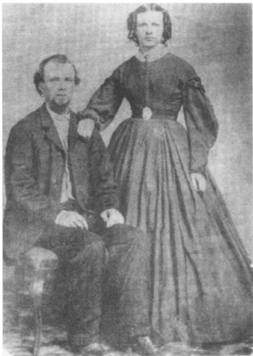
Young Abbie and John Vaughan, perhaps wedding shot

They eventually settled in Long Beach, California, where Abbie became a renowned teacher of the craft. Though she retired in 1913, her country called upon her once more in 1917. At the age of seventy-two, as the nation entered the Great War, Abbie returned to work for the Army to train a new generation of recruits. By then, she was known affectionately as “Mother Vaughan,” the Mother of Code Telegraphy.

Abbie passed away on September 17, 1924, age 79. Her husband, John, had passed a few years before, on June 23, 1921. They are both buried at Sunnyside Cemetery, in Long Beach, Ivy plot, lot 86. Sadly, her younger sister, Margery, “Madge”, Abbie’s equally skilled sister, passed away in 1894 after a brief illness

Though her heroism was documented in the regional press of the 1860s, her story resonated for a century, culminating in a major retrospective in the Los Angeles Times on May 5, 1958, which sought to preserve the legacy of “The Girl of Port Perry” for a new generation.

History is often loud in its moments of crisis but silent in its gratitude. While no official medal commemorates that night in the blizzard, Abbie built a prize far more lasting: a legacy of communication that resonated for a century. On the “Right Bank” of history, she remains the girl who heard what others couldn’t, and did what others wouldn’t.


Joe Girard © 2026

Thank you for reading. As always, you can add yourself to the notification list for newly published material by clicking here . Or emailing joe@girardmeister.com

Footnotes:

[1] Stone.  The entire project was done by hand: hard labor.  Hand hewn stone from local quarries was used to build the dam and the line the locks.

[2] a) his name was probably Anglicized from Georg-Ludwig Strubel. (b)Germany was not a country until 1871. In at least one census report he is from Baden, a principality that contained Heidelberg, Freiburg, and Mannheim.

[3] Sounders were still somewhat rare at that time, but they were becoming more and more common, especially as the war dragged on. And rail traffic increased. The need for speed.

[4] On that single day, September 17, 1862, nearly 3,700 lives were lost in battle, more than The War of 1812, the Mexican-American War, and the later Spanish-American War COMBINED. Total casualties that day were over 22,700 men.  D-Day (June 6, 1944) came at a price of 2,500 US lives; Pearl Harbor (Dec 7, 1941) took 2,400.

Author’s notes

  1. I first found this story in a book by Chris Enns called Iron Women.
  2. Descriptions of Annie’s heroic acts are somewhat thin. One has very little heroism, she merely stopped the train. Others are tauntingly more thrilling. There aren’t many descriptions. It’s been generally reported that she (1) leaped onto a box car (2) scrambled to the “coal car” (3) was hit by tunnel’s tell-tale rope, and (4) alerted the firemen. That’s all.
    So … the details from leaping to the first set of grab bars until she notified the fireman are all conjecture by the author. I spent time learning of and reviewing box car and tender car designs, studied train speeds in stations with switching yards, and how snow and moisture affected the tracks.
  3. Port Perry no longer exists. The junction of Turtle Creek and the Monongahela is a large rail yard, mostly supporting the US Steel Edgar Thomson Works.  Before this, Perrystown was sometimes called Perriestown.
  4. Abbie Gail was often referred to as just Abby, or Abigail.
  5. One source says that George Lewis Struble was of German descent. One says he was from Germany. In the 1880 census he claimed to have been born in Baden (which became part of Germany). Madge, still living with her parents, as a Telephone Operator.  But other sources have her a telegrapher.  Phones were quite new and even rare, but it’s sure possible.
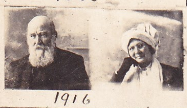
    50th Anniversary pics
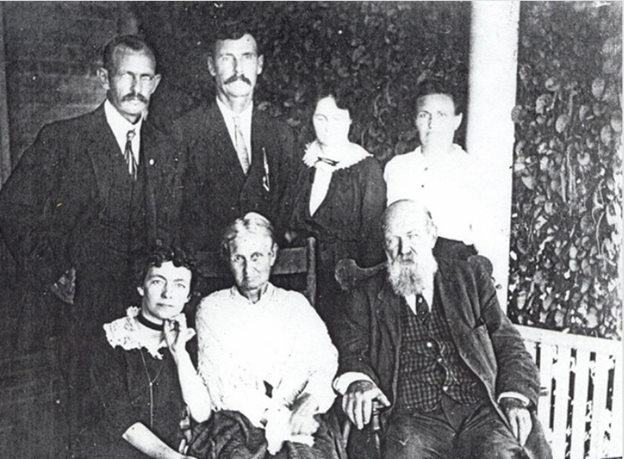
    Family reunion, circa 1920
Bold Bly

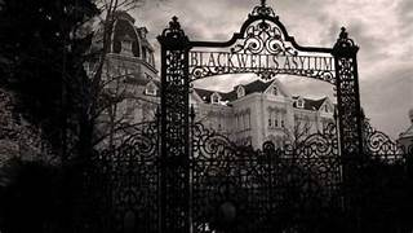
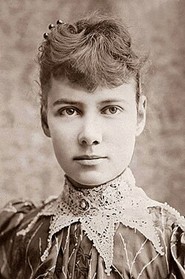
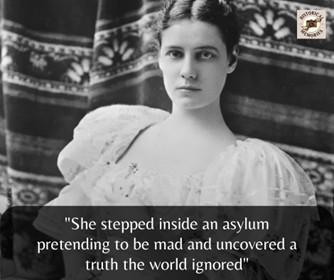
A young woman—twenty-two, penniless, and shabbily attired—is admitted to the Women’s Lunatic Asylum on New York’s Blackwell’s Island. Nothing in that moment hinted at what was about to unfold—or ignite.

___________________________________________________________

Michael Cochran was born in 1810 in the wild forests of hilly Westmoreland County, just east of Pittsburgh, Pennsylvania. Although his early life remains somewhat obscure, sources suggest he began as a laborer and mill worker. In 1830, he married a local girl, Catherine Murphy. They had ten children before Catherine passed away in 1857.

By 1849, Michael had acquired enough capital and know-how to purchase a mill a few miles north in Armstrong County, along Crooked Creek near its confluence with Cherry Run. The mill proved profitable, and he began to build a village around it, which he named “Cochran’s Mills.” The settlement soon had its own post office and general store—founded by Michael himself. Over time, he was made a local judge and acquired additional land holdings in the area.

Michael then met Mary Jane Kennedy, also recently widowed, and they married in 1859. Mary Jane bore him five more children, all born in Cochran’s Mills. Of his fifteen offspring, thirteen were daughters. Elizabeth, the 12th, arrived on May 5, 1864. One can imagine that life was rather spartan for all of them, despite Michael’s standing in the community.

Michael Cochran passed away in 1870, when Elizabeth was six years old. He died intestate, which carried severe financial consequences for his family.

Because Michael Cochran died intestate, his widow, Mary Jane, was entitled under Pennsylvania probate law to a dower—roughly one-third of the estate for her lifetime. The remaining assets, including the mill, store, and land, were distributed among the children or placed in a trust. While the dower provided some support—probably paid like an annuity at around $400 per year—֫ it was insufficient to maintain the family’s former standard of living, and the trust intended for the younger children was reportedly mismanaged. As a result, Mary Jane and her children were left in financially precarious circumstances, a reality that would shape Elizabeth’s determination.

There was nothing left in Cochran’s Mills for Mary Jane and her children. She moved the family to Pittsburgh, hoping to get enough work to keep the family solvent. It was a long fall from the more comfortable and socially lofty life along Crooked Creek.

By age fifteen, Elizabeth had completed as much education as was available to a girl from a working-class family attending the Common Schools. She went off, some fifty miles to the east and north, to attend Indiana Normal School in Indiana, Pennsylvania, in the rising foothills of the Allegheny Mountains. Normal schools, scattered across the country, were designed to prepare promising young women for work in elementary education—one of the few respectable professions available to women at the time.

Elizabeth’s education at the Indiana Normal School was cut very short; the family lacked the funds to complete even a single school year. She hadn’t even lasted one term. She left with little additional education and no accreditations. She returned to Pittsburgh to find work. But in her heart, she wanted to be a writer; despite having little more than a grade-school education.

One day in January 1885, Elizabeth was reading the Pittsburgh Dispatch when she came across a column titled “What Can Girls Do?” The author argued that women were fit for little beyond the home and unfit for most jobs or professions. Enraged, Elizabeth wrote a blistering but articulate rebuttal, combining passion with logic and moral reasoning. She signed it “Lonely Orphan Girl.”  It was published in the Dispatch. She was a writer!

The Dispatch’s chief editor, George Madden, was so impressed that he publicly called for the anonymous author, this Lonely Orphan Girl, to come forward. Elizabeth did. She was hired on the spot, beginning a career that would make her name known across the country.

__________________________________________

Elizabeth spent roughly two years at the Dispatch, penning columns, many of which blended human-interest stories with social commentary. She covered the plight of working women and children, urban poverty, and the struggles of the poor, displaying a talent for observation and reasoned argument. Her work combined storytelling with advocacy, bringing attention to social conditions that most readers ignored. She conducted on-the-ground investigations, visiting factories, schools, and neighborhoods of shabby row-houses. Though still early in her career, these columns established her as a journalist willing to tackle real-world issues, laying the foundation for the investigative reporting that would later make her famous.

It was while working here, at the Pittsburgh Dispatch, that Elizabeth formally changed her surname to “Cochrane”, adding an “e” at the end.  And, encouraged by the paper’s editor, Madden, she took the nom de plume of “Nellie Bly” (taken from a popular song of the day, chosen for its friendly, memorable, and slightly androgynous quality).

Perceiving Pittsburgh as too small a setting, with limited opportunity for the career she imagined, she left her job and set out for New York — armed only with a collection of her columns and letters, with no certifications, no connections, no high school diploma, and no accolades.

Upon arriving at the New York World, Elizabeth presented her portfolio to the editors and impressed them with her writing, insight, and determination. Joseph Pulitzer himself recognized her talent and quickly offered her a position. At last, she had a platform far larger than Pittsburgh — a citywide, even nationwide—stage on which to pursue the investigative journalism she had long envisioned.

At Pulitzer’s New York World, Elizabeth expanded her reporting beyond Pittsburgh, covering the daily struggles of New Yorkers living in poverty. She wrote about working women enduring long hours in factories, children forced into labor, and street urchins: orphans and abandoned children, whose numbers and conditions still contributed to driving the Orphan Train movement. Her assignments often took her into tenements, crowded schools, and poor neighborhoods, allowing her to document conditions that most citizens never saw. This work helped her build a reputation for attentiveness, compassion, and a willingness to confront the social problems of the city head-on.

It was the days of sensationalism in Newspapers.  Yellow Journalism. It sold papers. Boosted circulation.  Sales and circulation meant more ads, more money, the lifeblood of any profitable business, or one that intended to be profitable.

As such, Cochrane (AKA Nellie Bly, she was going exclusively by “Nellie Bly” now) approached the World’s leaders with a plan. It was approved. Pulitzer, when he became aware, supported it whole heartedly as well.

Nellie took lodging at the Temporary Home for Females, a refuge for women in duress, under the name Nellie Brown, at 84 Second Avenue. She deliberately behaved oddly, with increasing agitation, refusing to sleep, insisting other boarders were dangerous, and repeatedly claiming to be robbed. This behavior alarmed (terrified!) the house matron, who contacted the police after just a few days of her residence.

She was taken to Bellevue hospital for evaluation.  She kept up the charade, now perfected. From there she was sent to the Women’s Lunatic Asylum on Blackwell’s Island.

During her time at the asylum, Bly observed appalling conditions that shocked her. Patients were crowded into unsanitary cells, poorly clothed, and given inadequate food; many were physically restrained with straitjackets, manacles, or heavy chains. Staff treated the “patients” with cruelty and indifference, administering harsh punishments for minor infractions. The facility was understaffed and disorganized, with little medical oversight, and many inmates appeared to be there simply because they were poor, elderly, or socially inconvenient— rather than genuinely mentally ill. Bly documented these abuses, describing both the physical environment and the mistreatment she witnessed, producing a damning exposé that revealed systemic neglect and galvanized public demand for reform.

After ten days the paper, with Pulitzer’s power and gravitas, got her release.

The New York World ran a series of articles by “Nellie Bly” in November, 1887. The reaction was electric. The city was horrified by the reckless abuse. The New York State legislature responded immediately. Investigators were sent to Blackwell’s Island. Bly’s reports were confirmed. Grand Juries were convened.

It was what Pulitzer and his editors wanted: uncovering corruption and government incompetence. Sensationalism. Nellie Bly—Elizabeth Cochrane—was a journalistic star.

Changes soon followed. More and better trained staff. Improved sanitation and living conditions, less crowding. Stricter intake procedures to prevent wrongful commitments—whether by family or foe.

When the papers sold out, Bly was implored to republish the series.  She did, as a book, called Ten Days in a Mad-House, published by Norman Munro. It extended the sensation among the public. It quickly sold out its first run. It became one of the most famous works of investigative journalism of its era. And it is still in print and available. It’s still referenced today as well.

The immediate aftermath of her exposé elevated Nellie Bly to national fame. She continued writing for the World, leveraging her notoriety to pursue other investigative assignments and human-interest stories. She traveled extensively, reporting from locations and situations few women of the era could access, including prisons, factories, and hospitals.

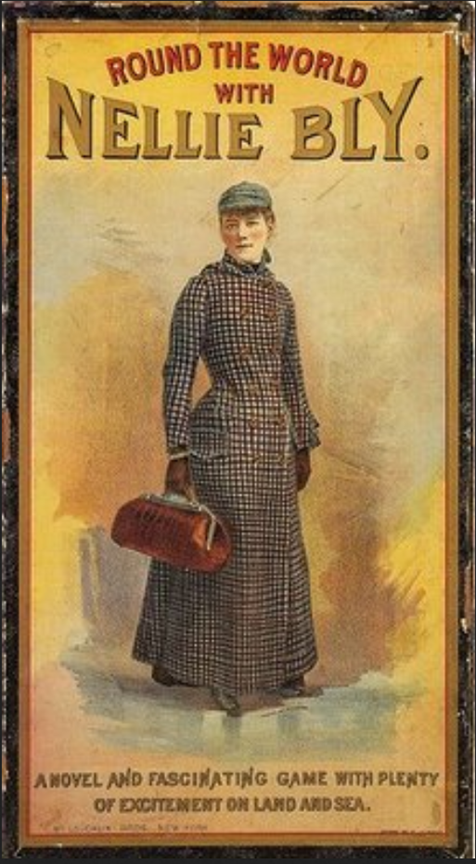
In 1888, she embarked on her most famous adventure: an attempt to travel around the world in fewer than 80 days, inspired by Jules Verne’s novel. She completed the journey in 72 days, gaining international acclaim and cementing her reputation for daring, meticulous reporting. The experiences were published in a book, Around the World in Seventy-Two Days (often called simply, 72 Days). It was also successful, well-received, and widely read.

Book Cover

Bly also continued her work in social reform. She reported on poverty, child labor, and conditions for working women, often combining immersive investigation with advocacy for legislative or institutional changes. Her career blended journalism, travel writing, and social activism, setting a template for investigative reporters and undercover journalists alike that stretched to today.

She eventually added business ventures to her endeavors, including investments in manufacturing and newspapers. Her career spanned decades, but the ten-day asylum exposé remained the defining achievement that launched her into public consciousness.

In 1895 she married widower Robert Seaman, thirty years her senior, a wealthy industrialist who owned the Iron Clad Manufacturing Company in Brooklyn. They never had any children. After his death, in 1904, Nellie took over the company.

By the 1920s Nellie was in declining health, suffering a series of lung infections. She knew the end was near, and closed out all of her financial issues from a hospital bed, including selling the company in January, 1922. She passed away just days later, January 27th. . Cause of death was listed as pneumonia, complicated by heart disease. Age 57 years.

Nellie Bly did not enter the lunatic asylum for fame. She stepped into darkness so others could be seen. She risked her own safety to give a voice to those the world had forgotten, and in doing so, she helped shape the future of journalism. With only an elementary school education, grit, determination and self-confidence.

Joe Girard © 2025

Thank you for reading. As always, you can add yourself to the notification list for newly published material by clicking here . Or emailing joe@girardmeister.com


Notes:
In 1998, Bly was inducted into the National Women’s Hall of Fame.

https://www.britannica.com/biography/Nellie-Bly

What the H?

“H” is for Highway.  “H” is for “History”. And “H” is for … “Pittsburgh”?

I’ve never driven across Pennsylvania. If I ever get the chance, I’d allot ample time to depart the Pennsylvania Turnpike somewhere in the Appalachians. Then I’d pick up US Highway 30, head west toward Pittsburgh, and enjoy a slow unhurried drive.

I’d take in the scenery of the rolling valleys and ridges they call mountains. I’d take in the forests, the scattered small towns and the fertile farmland. And, of course, it would be a drive through history.

Along Highway US 30

Along Highway US 30

Heading west on the Penn Turnpike, just after Fort Littleton — and after descending Sideling Hill Ridge — there’s a break in the next ridge. That’s Ray’s Hill Ridge. It’s there that the Turnpike (I-76) is joined by I-70.  That’s your cue to exit. It’s a tricky double-looper getting onto US 30 near Breezewood – so follow the signs carefully.

Get on US 30 in time to see the Raystown Branch[1] of the Juniata River. From here, this branch turns north to feed the Susquehanna, which empties into the Chesapeake.  But we’re headed to Pittsburgh, where the mighty Ohio River is formed at the great river confluence.  That’s a whole different watershed (Mississippi vs. Atlantic), so we’ve got more hills to climb. [7]

Safely off the interstates and turnpikes, we’re headed on the highway through history, and trying to nail down that elusive H.

Just 40 miles through the trees and gentle Appalachian hills and we’re at the Flight 93 National Memorial.  Established and maintained by the US National Park Service at the crash site of United Airlines Flight 93, it is a tribute to the passengers who helped save the US Capitol, in Washington, DC, from attack on 9/11/2001. It functions not only as a memorial, but also as a classroom that honors those killed by terrorism on that day, the bravery shown on that day, and America’s enduring spirit.

Going back a bit further in time: this stretch of road coincides with part of the original Lincoln Highway, America’s first coast-to-coast motorway.  Conceived in the Edwardian/Pre-war Era, in 1912, with construction beginning a year later, the Lincoln Highway was one of the first really grand endeavors to link America’s appetite for free-spirited adventure with the automobile.

Lincoln Highway Historic Sign Marker

Lincoln Highway Historic Sign Marker


Coming sooner in our trip along US 30, but farther back in time, and we’re passing through Bedford.  Bedford is named for Fort Bedford.  A bit further along the highway, and soon after the Flight 93 Memorial, we’ll cross a ridge and drop into the Ohio/Mississippi basin. Soon, we’ll come to the small borough of Ligonier, which is named for Fort Ligonier. [4]

To tell the story of these forts — Fort Bedford and Fort Ligonier — we’ll go back a bit further, to 1707. But first, let’s stop at 1762, at Jean Bonnet Tavern, an establishment providing lodging, food and beverages to travelers across Pennsylvania since 1762.[2]  Located on US 30 just past Bedford on the way to Shellsburg, they’ll nourish you with fine local and historic cuisine – and impress you with an impressive selection of refreshments, including beers and ciders (if internet reviews are to be believed).

To figure out why the Tavern is there, we’ll have to continue back to 1707, before returning.

1707: That’s just at the same time as the formal union of Scotland and England into a single country: Great Britain.  John Forbes was born that year, across the Firth of Forth from Edinburgh, Scotland, in the lovely peninsula called “the Kingdom of Fife” and “the Birthplace of Golf.”  He was raised there, at the family estate, as the son of an army officer.

John became a military man himself. After a distinguished career he was appointed a Brigadier General by Prime Minister William Pitt (the Elder). This was during the French and Indian War [3] (1756-63), which was the largest fight for control of North America between England and France.  In 1758 Forbes was appointed the task of taking the French stronghold, far across Pennsylvania — across the Appalachians — at the head of the Ohio River: Fort Duquesne.

Forbes was a very practical and straightforward man.  The path from British-controlled Philadelphia – across the mountains – was difficult indeed.

Forbes chose this very route we would travel for his road. He chose it for its gentler elevation changes and few river crossings.  It would be called “Forbes Road.” Fearing loss of communication and supply lines, Forbes had strongholds built along Forbes Road, among them Fort Bedford and Fort Ligonier. So well-chosen for location – water supply and good transportation links through the mountains — that they became the boroughs [4] of Bedford and Ligonier along our Highway 30 path.

Forbes grew unhealthy as he led his road-building army across Pennsylvania through the summer of 1758. By the time they reached Fort Duquesne he was very ill indeed. His bravery and resolve through the illness helped inspire his men.

The British initial attempt to take the fort was beaten back by the French and their Amerindian allies.  However, it soon became apparent that Forbes had far superior numbers and a solid supply line: he could lay siege to the fort indefinitely.

Consequently the French lost their Indian allies and, subsequently, chose to abandon Fort Duquesne without further fight. But not before they had burned it completely.

Forbes claimed the strategic location for the British crown. He had the fort rebuilt and named for the man who had commissioned him: Fort Pitt.

He named the settlement likewise after Pitt, and sent him a letter informing him so. In the letter he spelled it in his native Scottish style: Pittsbourgh.  No doubt intending it to be pronounced like a Scotsman would pronounce Edinburgh: Edd-inn-burr-ah.

Forbes, now gravely ill, returned almost immediately to Philadelphia.  Unfortunately, he died only a few months later, aged only 51. [5]   Forbes Avenue in Pittsburgh was named after him, as was the baseball stadium Forbes Field, which stood from 1909-1971.

When the city was officially chartered by the state of Pennsylvania in 1816, citing Forbes’ letter to Pitt, the charter read Pittsburgh, with an “H”.

Well that explains how the “H” got in Pittsburgh, but that’s not the rest of the story. An earlier version of the Domestic Names Committee of the US Board on Geographic Names (see footnote 1) detested the “H” in “-burg” named cities.

In 1890 the H was excised, and – officially anyhow, at the federal level – the name was Pittsburg, without the H.  Oh those Germans must’ve been happy.

Oddly, beginning in 1817, when the official copies of the charter were made, the printers assumed there had been an error, and spelled it without the “H.” The Board on Names’ 1890 decision cited these copies containing the error as justification for dropping the “H.”

Famous 1910 Honus Wagner card; uniform without the H

Famous 1910 Honus Wagner card; uniform without the H

Strong-willed as most Pittsburghers and many Pennsylvanians are, they would not change the spelling. They put up quite a fuss. All city and some state documents and correspondence continued to proudly use the “H.”  So did Pittsburgh University and the local press. The Pirates, however, a major league baseball team, used the official spelling, sans H. (see photo [6]).

Well, the feud persisted, until , in 1911 (in the Edwardian/Pre-war Era) – after a reorganization of the US Board on Geographic Names – the government agency in charge of names finally relented.

Was it because of the obstinacy of Pittsburghers? Or was it because they’d been made aware of the spelling in the true copy of the original charter? Who can to say?  Regardless, the name was officially Pittsburgh, with the H, once again.

I guess it pays to be consistent (or is that persistent?) when arguing about silent letters.


Happy and Safe Travels


Joe Girard © 2015


[1] – Raystown Branch: The Domestic Names Committee of the US Board on Geographic Names does not like possessive apostrophes.  This river was called the Ray’s Town Branch until 1890.  Similarly, Ray’s Hill Ridge is now: Rays Hill Ridge. Hence: Pikes Peak, not Pike’s Peak, etc. Five such names have been permitted, including, most famously, Martha’s Vineyard.


[2] Jean Bonnet Tavern: http://www.jeanbonnettavern.com/


[3] French and Indian War, 1756-63: most non-American and non-British commonwealth historians call this The Seven Years’ War.


[4] Boroughs in Pennsylvania are akin to Towns in many other states.  Usually much smaller than cities, population is usually from a few hundred to several thousand.


[5] John Forbes

Forbes Trail: http://www.warforempire.org/visit/forbes_trail.aspx

Biographical notes: http://www.undiscoveredscotland.co.uk/usbiography/f/johnforbes.html

[6] A very rare baseball card indeed.  A whole story behind it. A mint condition Wagner card like this recently sold for $2.8 Million.

[7] Continental Divides of North America.  See the Eastern Divide in western Pennsylvania


Old Maps

Lincoln Highway, 1924, Western Pennsylvania

Lincoln Highway, 1924, Western Pennsylvania

Early Map of terrain and Forbes Road, South Central PA

Early Map of terrain and Forbes Road, South Central PA