Monthly Archives: March 2013

Imagine: MOOKP and POOP

Eyetooth: A canine tooth of the upper jaw –Webster’s Dictionary

Pooh: interjection, used to express contempt or disapproval. – Webster’s

Oddly, Webster’s does not define Canine Tooth.  Nor the character developed by A.A. Milne.

Canine Tooth: Any of four teeth having a thick conical crown and a long conical root, adjacent to the distal surface of the lateral incisors, … also, cuspid. – the Medical Online Dictionary.

=====

He had never seen his wife.  A few years before they met, he was blinded as a result of a horrible chemical accident at work.  The damage to his left eye was so severe that it was completely removed.  His right eye was too unhealthy for him to qualify as a candidate for corneal transplant.

Still,  one  ophthalmic surgeon held out hope.  His retina was reasonably healthy.  It had a blood supply and nerve activity. If they could just get some light to it.

=====

She was intensely crippled by colitis.  Constantly faint and feverish, passing out and falling into slumber – whether pain or fatigue induced, it did not matter – was her only relief for so many months that she could not remember.

Nothing seemed to help.  Cramping seized her abdomen for days, weeks … months; and rocked her from deep in her intestines.  Could medicine bring a young woman back from the edge of darkness, and return the healthy mother that her children needed, and deserved?

=====

Harsh circumstance often gives rise to imagination and creativity.  The first two decades of the 19th century were cold, but the year 1816 stands out as especially cold, wet, grey and depressing.  Such would be the circumstance that gave the world one of its most creative stories that still holds our imaginations today.

First: why was it cold?  Scientists have long noted a strong correlation between solar weather an earth’s climate patterns.  The best indicator of solar weather is sun spot activity.  Since the Medieval Warming Period (the period that gave rise to the colonization of Greenland, 950 to 1250AD), the northern hemisphere was generally cooler until about 1900.  During that period, there have been two periods of especially low sunspot activity: the Maunder Minimum from about 1645-1745 (coinciding with the Little Ice Age) and the not-quite-as-severe Dalton Minimum of about 1790-1830, which also coincided with lower-than-average temperatures.

1816 will forever stand out in history.  In the United States, Canada and Western Europe it has many names, including “The year without a summer.”   Bedding and clothing hung out to dry often didn’t dry; rather they froze stiff on clotheslines that summer.   Rivers and lakes froze over in July and August across New England and Pennsylvania.

The Dalton Minimum cruelly coincided with a short but intense period of extreme worldwide volcanic activity.  Five major worldwide volcanic eruptions, beginning in 1812 on Saint Vincent in the Caribbean, spewed tiny particles high into the atmosphere.  Rather than settle out, these road the earth’s upper air currents, until she was shrouded in a type of early sunscreen.  The last of the five, in April 1815, on the Indonesian Island of Sumbawa, was of biblical scale, the earth’s largest eruption in over 1,600 years.  The blast was heard nearly 2,000 miles away.

As crops failed and moods drifted to dreary, Percy Shelley (among the finest lyric poets in the English language) and his 18-yearold fiancée/girlfriend Mary Godwin found themselves in Geneva, Switzerland. They were for a while the guests of famous English poet and ex-patriot Lord Byron, and his personal physician John Polidori.

The weather that summer was so abysmally cold, wet and dreary that they decided to pass the time telling each other creepy stories of the supernatural, and topped it off with a writing contest: they would all write imaginative stories of the most bizarre and terrifying sort.

Mary Godwin soon married Percy, becoming Mary Shelley.  The story she wrote was re-worked into the now-famous and classic thriller, Frankenstein.

As imaginative and disturbing as the story remains today, it cannot match the imaginative healing powers of the human race, and the human body, to which we now turn our attention.


=====

Months before the final bandages were removed from his right eye, a strange and bizarre Frankenstein-like process was begun.  MOOKP.  They would soon know the outcome.

The first step was pretty simple, if not odd: removing some of the tissue that lines the inner mouth, and using it to replace some corneal tissue in the eye.  This would put receptive, healing and moisture producing tissue where it needed to be.  It would become the healthy blood nourishing platform for what would come four months later.

The next step involved removing a cuspid tooth from the jaw, complete with roots and part of the bone.  The tooth was then ground to the desired shape and size.  A hole was drilled into the tooth, which received a plastic cylindrical optical lens.  The next step was to embed the tooth somewhere in the body where the roots would continue to receive nourishment, and the tooth would grow a thin protective sheath.  For this patient, it was in his substantial cheek tissue.
For four months the oral tissue grew in the eye, and the tooth remained “alive”, embedded in the cheek.  Then it was time: Let there be light!

In the final surgery, the new corneal replacement tissue in his right eye (the tissue from his mouth) was peeled back.  Then the tooth (yes, quite literally an eye tooth) — with an optical canal filled with a plastic lens, and coated in a thin layer of sheathing — was removed from his cheek and embedded in the new corneal replacement tissue.  Positioned just so, in his eye.

When the bandages were removed, light passed through the canal of the tooth, onto his retina.  He saw his wife, and she was beautiful.

Over the months, as his retina is re-trained in seeing, his vision will grow keen.

This process is called Modified Osteo-odonto-keratoprosthesis (or MOOKP).  It works.  The eye is not likely to reject tissue from the same body, and the plastic lens – coated by a thin sheath that was grown in while in his cheek – is not detected by the eye.  [Sources and resources for this story below, in bibliography].

A Very Happy Man: Sees because he has a tooth in his eye

A Very Happy Man: Sees because he has a tooth in his eye

=====

The severe and crippling colitis was the result of a raging C. diff infection, short for Clostridium difficile. The human gut is full of many trillions of bacteria – more than 1,000 different types in the large intestine alone – and they are mostly beneficial to humans.  They inhibit the growth of pathogenic bacteria.  For digestion, they produce enzymes that degrade the largest biomolecules.  It is a weird little ecosystem in our guts: bacteria thrive on some of our food, but the waste they generate is in turn food for us.  Life for humans could not exist without these beneficial bacteria.

As humans, our western doctors tend to prescribe a lot of antibiotics.  Perhaps too many and too often. One possible negative consequence of taking antibiotics is that too many of these beneficial bacteria are killed – and get flushed out with the poo.  A mild case might result in tummy rumbles and a period of diarrhea, until the body can rebalance itself.  Gone too far, and the body’s last feet of the alimentary canal can be taken over by the opportunistic  C. diff bacterium, well known to lurk around hospitals where sick people with weakened intestinal bacterial can succumb to a new unwelcome colonization.

Our young mother was treated with antibiotics for an oral surgery several months ago.  An extreme case C. Diff resulted, taking over her intestines and causing a raging case of colitis that crippled her, and brought her family’s lives to a stop.

The process for jump-starting her healing began only a few days before the big procedure.  First a donor was selected. Usually it is someone close like a spouse or family member.  For our young mother it was her husband.  The process requires the donor to produce and submit a healthy stool sample for the necessary lab work.

Meanwhile, the patient has started a gastro-intestinal purge – a process that someone preparing for a colonoscopy might find familiar, if not uncomfortable.  Two days of fasting and treatments with colonics has done the trick.  It wasn’t fun, but months and months with debilitating colitis wasn’t fun either.

Cleared for the procedure, the patient is anesthetized.  The process is not that dissimilar, again, from the colonoscopy.  A tube — inserted through her anus, past her rectum and up through the colon in to the intestines — delivers a slurry.  It is a sort of blenderized purée made from her husband’s feces.

This slurry contains several trillion healthy and benevolent bacteria.  Within hours, in fact before she awakes, they have begun colonizing her entire bowels – large and small intestines.  The C. Diff is forced out by the more vigorous bacteria, “donated” by her healthy husband.  In just a few more days her family will get her back —their mother – his wife. She will get her life and vivacity back.  Delivered from despair by a poo transplant, or more officially: a fecal microbiota transplantation.


Every human mind is full of creative potential, fueled by imagination, life’s experiences and observations, — and each individual’s needs, goals, desires, hopes, dreams.  For 18-year old Mary Shelley it was a deep, cold, dark summer.  For doctors, it is their bravery to see beyond ordinary disgust and seize upon truly innovative methods to bring health to suffering humans.

What will it be for you?

Now, do you have another definition for “eye teeth”?  The next time someone comes up with an outrageous yet creative idea, will you say “pooh”?  Or “Good for you”?

Joe Girard © 2013


Story Sources:

http://www.npr.org/templates/story/story.php?storyId=112933586

http://www.examiner.com/article/tooth-the-eye-repairs-vision-at-um

http://www.dailymail.co.uk/news/article-1197256/Blind-man-sees-wife-time-having-TOOTH-implanted-eye.html

http://en.wikipedia.org/wiki/Osteo-odonto-keratoprosthesis

Feces transplant sources

Discover Magazine, “The Healing Power of Poop”, http://discovermagazine.com/2012/oct/16-big-idea-tap-the-healing-power-of-poop

http://www.nytimes.com/2013/01/17/health/disgusting-maybe-but-treatment-works-study-finds.html?_r=0

Michael Mann (of Hockey Stick fame) on the Little Ice Age, and other global weather and temperature periods pre-1900.  http://www.meteo.psu.edu/holocene/public_html/shared/articles/littleiceage.pdf


The IT Security Crowd

Tax Time and the IRS has untold terabytes of information on all of us.  How secure do you feel about that?  The Government Accounting Office has audited the IRS’s security efforts and procedures, and found them to be sorely lacking, leaving Taxpayer personal information insecure.

Among the vulnerabilities identified in the GAO report are easily-guessed passwords, passwords that hadn’t been changed in almost two years, and storing unencrypted user names and passwords in a file with a revealing name. …The IRS also has been lax with data encryption and in controlling access to databases, servers, and systems,…

Rest easy though, the GAO report “makes no mention of actual security breaches during the period audited.”

Over at the US government Commerce Department’s NIST (National Institute for Standards and Technology — sort of a very high tech outfit) they had the wherewithal and awareness to maintain a database of all our vulnerabilities.  Turns out that database was hacked… penetrated by malware anyway  (which is pretty dang serious in a supposedly high secure environment).  Don’t worry.  Nothing bad happened … this time.  Just that someone’s software penetrated the servers that store our government’s thoughts on our own National Vulnerabilities.

Not done yet.  A guy named Wronald Brest, of MPD — a high-tech design and engineering firm in Owensboro, KY — was caught using pirated software he had obtained from Chinese and Russian programmers.  Turns out he paid them to reverse engineer his favorite software, then used that software to do design work on Black Hawk helicopters, Patriot Missile components, the President’s Marine One and many other programs, many of them classified.

It’s no secret that the Chinese are trying to hack into our most secure industrial and government databases — this guy is inviting them right in.  And who has a name like “Wronald” anyhow?

The wars of the future will almost certainly involve cyber tactics and strategies.  Are we ready to play the game?

Over at Carnegie-Mellon University in Pittsburgh, they’ve teamed up with the National Security Agency to set up Toaster Wars — a weird nickname for what amounts to Hacking War competitions among high schoolers and middle schoolers.  Look for IT Security to be the next really, really big thing — could even replace “the military industrial complex.”

Ready or not, here comes the future.

Joe Girard (c) 2013

Sbux

Well, Starbucks can’t seem to make anyone consistently happy.  At least anyone with excitable political views.  They do keep making money however. (SBUX up about 55% in last 2 years).

For the longest time it was hip among the Left to eschew Starbucks; they were polluting all the high traffic areas with look-alike stores making look-alike coffee specialty drinks.  Call it the “too much like Wal-mart” problem, but it was cool to scorn Starbucks and their regular customers.

But wait, Starbucks actually looks out for their employees, providing much better benefits than typical behind-the-counter grunts.  An impressive list: Retirement plans, sick leave, vacation, management opportunity.  Fortune rated Starbucks one of the best companies to work for in America. So that’s way better than most employees get at, say, Wal-mart or Staples.  So, good for Starbucks, from the Left.

Then Starbucks’ CEO Howard Schultz came out strong in favor of “gay marriage.”  Wow, Yay for him and Starbucks (says the Left); and then he and Starbucks get the scorn of the Social Conservative Right.Female_homosexuality_symbol.svg

Now Starbucks has announced that they will permit firearms in their stores — even open carry — if the weapon is carried by a person  consistent with the jurisdiction’s laws and regulations.  So now it’s all “how evil is Starbucks?” on the Left and “Rah-rah for Starbucks” from the liberty wing of the Right and the NRA crowd.

If the two ladies behind the counter serving coffee are married to each other, does that make coffee taste any better, or worse?  If the CEO supports same-sex marriage, does that really affect anything either?

For me it’s simply about cost for value, taste and convenience.  Starbucks is kind of expensive, so I don’t go there often.  But it’s convenient, so I do pop in from time to time — and now I (sheepishly) admit that I have the Starbucks app on my smartphone.

And to be honest, if it turned out that someone in Starbucks was packing, that would actually make me feel quite a bit more safe. [I am not a gun nut, own no guns and am not an NRA member, although I do occasionally enjoy squeezing off a few

gunscoffee

rounds].  Gun owners are easily the most reserved, practical, careful and responsible people I know.  Consider the average coffee shop, especially a Starbucks.  It’s a place where reasonably affluent people lounge around chatting, surfing the web and generally not paying attention to the commotion around them; as such, they present a rather soft target for a whack-a-doo or a terrorist to shoot up.

Arizona has rather liberal gun-carry laws, even open carry.  I’ve been hiking near Phoenix and come across others who are open carrying.  Didn’t cause me the least bit of stress or concern.  Had a nice talk with one fellow about picking encelia for use as a spice in cooking and for medical use (good for skin and minor wounds); he was carrying several stalks he had “harvested”, and quite proud of it — taking several minutes to explain to me how to spot it and how to cook with it.

This is all fine with the classical liberal.  Pretty much live and let live.

bis bald!

Joe Girard

(C) 2013


March Snow Haikus

Snow retreats again
Reveals grass blades, mostly brown,
Not green.  No Spring, yet.

___________________

Gay, cool, bright March day.
No Watt-hours from panels.
Alas, snow covers them.

1938: Heat and Passion

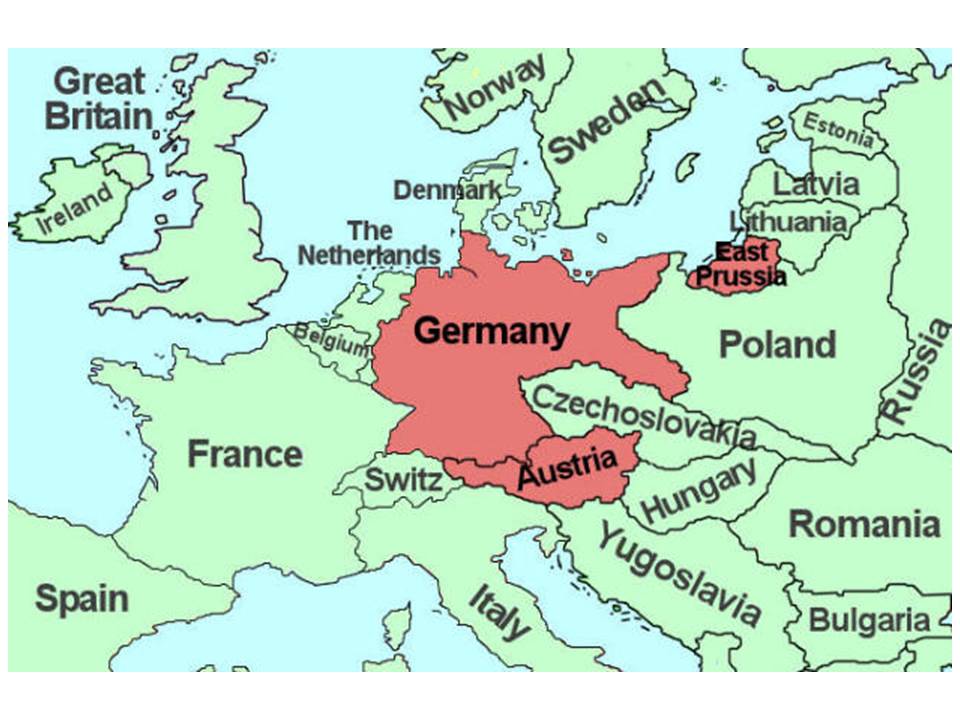
This month — March, 2013 — marks the 75th anniversary of an event that signified the world tipping hard toward heated chaos.  The Third Reich, under Hitler’s Nazidom, had bullied and brow-beat Austrian leadership — and perverted Austrian public opinion — for several years.  The annexation of Austria, or the Anschluss (in German: Anschluss Österreichs), was completed that month.  Few believed that Hitler’s appetite would be sated for long, that the heat of passion had cooled, or that the winds of war could long be avoided.

The Anschluss left the Czech half of Czechoslovakia virtually surrounded by the hungry Third Reich (see figure).  And as the heat of the 1938 summer made temperatures rise, so too did Hitler’s new acquisition hasten his desire for Lebensraum – living space.  He cast his wolfish eyes on Czechoslovakia, on the premise that citizens there of German descent were being mistreated.  Shouldn’t they be part of a Greater Germany?Slide1

Through the heated summer Hitler made his claim that he would march the Wehrmacht on behalf of Sudentenland’s ethnic Germans.  Britain and France were bound by treaty to defend Czechoslovakia’s sovereignty.  Is this how the next Great War would start?

The British Prime Minister, Neville Chamberlain, flew to Munich in Mid-September to meet Hitler in Berchtesgaden.  Hitler delivered his ultimatum (Dictat) firmly.  Afterward, Chamberlain and Daladier, the French Prime Minister, met and agreed that the Sudentenland must be conceded to Germany – without having the decency to include Czechoslovakia’s President Benes on the negotiations or discussions.

Sudentland, in deep Purple

Sudetenland, in deep Purple

Days later, Chamberlain flew back to Munich for further negotiations.  Now that France and Britain had agreed to appease him, Hitler had additional demands.  With Czech soldiers on the border and in the streets ready to defend their nation — and ill-prepared British and French armies only beginning to mobilize — the world waited for news of the negotiations’ results.

Across the Atlantic in the United States there was edgy unease.  She had slipped back into deep economic recession, as FDR had eased off on his massive stimulus – his own five year spending extravaganza coming after Hoover’s stimulus efforts – only to learn that the economy had not been sufficiently kick-started and unemployment shot back up to 18%.  Anxiously, Americans wanted to know if there would be war in Europe. But, in place of news and the voice of Edward R Murrow, there was only static over the airwaves.  What was going on?

A terrific hurricane had been making its way across the Atlantic.  Without satellites or even weather aircraft, the only way to track storms was by reports from merchant or cruise ships, and by wind, surf and barometric measurements far away on land.  This storm was reported to have turned north hundreds of miles east of the North Carolina-to-Florida coast.  All hurricanes that do so – it was believed – then go to cooler waters, weaken, turn northeast, and fade away.

Not this one.

There is some controversy over what was the hottest decade in US and North Atlantic history.  Until recently the 1930s has routinely held that distinction.  Many climate scientists say that it was 2000-2010.  However, for North America and the North Atlantic, consider that the hottest temperatures ever recorded in 26 of the 50 states were in that decade [1] (Even though Alaska and Hawaii were not yet states, their weather records are included in the reference).  That’s quite remarkable.  And the hottest temperatures ever recorded in Canada and Iceland were also in this decade.

And 1938 was hot too.  As the storm moved north, it was blocked by an unusually large and strong high pressure in the north Atlantic between Bermuda and the Grand Banks.  Undetected, it slinked back to the northwest.  Fueled by the strong high and an unusually warm Gulf Stream, it grew stronger (hurricanes were not named then).

The barometric pressure dropped throughout New England.  Yet a major storm had not hit since 1821, and none had failed to turn northeast since the hurricane of 1815.  Why would it not do so now?  Eventually the barometric pressure dropped to one of the lowest ever recorded in the US until that time: 27.76 inches.  Up in the hills of Vermont people could smell sea air.  What was happening?

On Long Island a man had just received a barometer via mail order.  He set it up.  The pressure reading was so low that it barely registered at the bottom of the scale.  Figuring it must be defective he repackaged it and drove off to the post office to return it.  While he was gone his house disappeared.[4]

Path, The 1938 Hurricane, AKA the Long Island Express, the Great New England Hurricane

Path, The 1938 Hurricane, AKA the Long Island Express, the Great New England Hurricane

It’s hard to compare hurricanes of different eras, but The Great New England Hurricane of September, 1938, would probably knock the socks off super-storm Hurricane Sandy of 2012, like a mountain lion would tear into a kitty cat.  Mercifully the ’38 storm weakened from a Category 5 to a Category 3 storm just before making landfall on Long Island in the early afternoon of September 21, 1938.  Sandy was certainly larger in size, but was only a Category 1 just before landfall, slipping to sub-hurricane intensity as she hit land (is Sandy a boy or a girl?).

Long Island was rocked with winds of 150-mph and surf surges of 35 feet that washed completely over the island.  The storm’s arrival was unfortunately simultaneous with a very strong high tide, tugged hard by the coincidence of the moon’s perigee and a sun-moon syzygy, from by a nearly new moon at mid-day and at equinox.  [Unfortunately, Sandy also coincided with a new moon high tide, although in late October, there was no equinox syzygy, nor was there lunar perigee].

The east end of Long Island, and all of the states of Rhode Island and Connecticut, received the full brunt of the storm’s right hand, as the counter-clockwise rotation adds to the wind and surge on the right side of northern hemisphere storms.  It remains today the worst natural disaster ever in Connecticut.

When the storm cleared, many hundreds were dead, many thousands more were homeless, devastation was widespread – but the US now had their news from Europe.  There would be no war.  Not yet, anyhow.  The Czech, British and French armies would stand down.  Nazi jackboots soon marched into the Sudetenland.  Churchill, on the backbenches and not in government, dryly observed: “Britain and France had to choose between dishonor and war.  They chose dishonor.  They will have war.”

The ignominy continued.  In March 1939, Hitler grabbed the remainder of Czechoslovakia.  Again Britain and France declined to honor their sworn and treaty-bound obligation to defend Czechoslovakia’s sovereignty … on the grounds that, since the country was first split into a Czech Republic and a Slovak Republic before the seizure, the country of Czechoslovakia no longer existed.  Shameful.

Soon enough – and still unprepared – in September, 1939, they would get  war, nonetheless, with the dismemberment of Poland.

If the Hurricane of 1938 were to hit New England today, we would probably think of Sandy and Katrina as unpleasant days at the park.  Satellite warnings and evacuation notices could not save the millions and millions of homes and buildings and highways and bridges that have been constructed since then – to say nothing of trying to evacuate so many more tens of millions.  There is simply no preparing for devastation and power on that scale.

And if the heat of fascist or extremist passion that swept over the world in the 1930s were to return, I doubt if the world would be prepared for that either, regardless of how much warning we had.

Until then, I wish you peace

Joe Girard © 2013


[1] State-by-state Extreme weather records: http://www.ncdc.noaa.gov/extremes/scec/records

[2] North American and European warming from mid-1800s to 1940: http://www.aip.org/history/climate/20ctrend.htm

[3] 1938 Timeline: http://www.oocities.org/ww2_remembered/1938.html

[4] Story of the man with the barometer from The Glory and the Dream; A Narrative History of America: 1932-1972, Volume I.  Pg 224-225, William Manchester.

Naming Names

This afternoon I watched the 2nd half of a terrific NCAA tournament game between two very talented and well-coached teams, the Marquette Warriors and the Butler Bulldogs.  There were quite a few lucky breaks and close calls coming down the stretch that could have gone either way — with each team getting their share of good and bad breaks — and in the end Marquette won by a whisker, 74-72.

The outcome was somewhat pleasing; I admit to a slight preference for Marquette, as it is one of those small schools that often fills the role of giant slayer, frequently doing quite well in the big tournament.  In fact, in 1977, they won the tournament and were national champions.  Oh, and since Marquette is located in downtown Milwaukee — and that’s where I grew up (actually in a ‘burb on the near north side) — I’ve always been partial to the Marquette Warriors.

Oops, did I say “Warriors” again?  That’s a slip.  They are called the Marquette  “Golden Eagles.”  However it was the Marquette “Warrors” who won the national championship 36 years ago. In an early wave of political correctness, and not wishing to offend anyone, Marquette University was one of those schools who changed their name from an American Indian name to something more neutral.  Another school that did this was Arkansas State University — where I earned my undergraduate degree — who changed their name from “Indians” to “Red Hawks.”

Soon after the Golden Eagles victory today there came news that Wichita State had beaten heavily favored Gonzaga (another tiny school that often does quite well in basketball).  Wichita State’s team name?  The Shockers.  The name does not come from their propensity to “shock” other teams like Gonzaga with unexpected performance and wins, but rather to their history of “shocking” or “harvesting” wheat.

That reminded me of an article I read in the paper this morning about the NHL hockey season, something I rarely do — hockey is one big yawn to me.  So much for my Canadian heritage.  Anyway, it seems as the Colorado Avalanche (another weird name) are abysmally bad this year.  For them the lockout mercifully limited their misery this season, and the misery of their fans, too.  They are so bad, they might even get 1st pick in the next amateur draft.  The player they would most likely pick is Colorado native Seth Jones, who currently plays on a junior hockey team called the Portland Winterhawks.  Winterhawks?

Cruise up I-5 a few hours to Seattle and you’ll find football’s Seahawks.  What are Winterhawks and Seahawks?  Those sound more like American Indian names than sports or animal names, don’t they?

Down in the Bay Area, Stanford’s teams are named for a color.  They are the Cardinal.  Not the Cardinals; the Cardinal.

From there slide over to the coast and the University of California at Santa Cruz has named their athletes the Banana

UCSC - Banana Slug

UCSC – Banana Slug

Slugs.  Really?  What a disgusting creature, sliming wherever they go and for some reason getting themselves stuck inside discarded beer containers.  And it doesn’t look the least bit intimidating: he’s carrying a book (by Plato!) and wearing glasses.  What is it going to do?  Defeat them with logic and dialog?

It does get weirder though.  The Community College of Scottsdale (AZ) are the Fighting Artichokes.  Just across Phoenix in Tempe, the Arizona State athletes are Sun Devils … now a Dust Devil is a rather cool weather phenomenon, but they mess it up by being Sun Devils — whatever that is — and having a mascot who looks like Satan.  Really?  Well, not to be outdone, across the country in North Carolina, Wake Forest University (another little school that often does well in basketball) are the Demon Deacons.  Ok, now you’ve got one team who is represented by Satan, and another by someone who is preaching and doing Satan’s work here on earth.  Oy weh!

ASU's Sparky the Sun Devil

ASU’s Sparky the Sun Devil

In the end, it doesn’t really matter, does it?  It’s just like people’s names, whether they be Tom, Dick and Harry, or LaToya, DeWayne, Shaquile, Lemonjello, Manti, Wyntyr, Muffi, Buffy, Chrystee, Jaxon, Stanley-Ann, or Barack.  The right thing to do is call people or schools what they want to be called, try to pronounce it they way they would, and everyone just go about their business.

Just sayin’

Joe Girard © 2013


Afterthought:  Butler used to be called “The Christians.”  I wonder if they ever played the Lions (Columbia, Penn state, Loyola Marymount, and others) or the Demon Deacons.


Springing to an Anniversary

Spring has sprung!  Regardless of the on-going winter weather across much of the US — and many of us bracing for yet another round of brisk temperatures and snow.  So much for Punxutawney Phil — the unwilling weather prognosticator who didn’t see his shadow last month, thus supposedly predicting an early spring.

Across the country newspapers and newsrooms are carrying stories about today being the 10th anniversary of the beginning of the Iraq War (OIF: Operation Iraqi Freedom).  Lots of columns on what went wrong, what were the lessons learned, what went right. I’ll suggest two here, one from the right (more or less) by Jeff Jacoby of the Boston Globe, and one from the left (I suppose) by Tom Friedman, citizen of the world.

What went wrong is epic.  And it cost over $1Trillion … so far, as we’ll be paying to take care of wounded vets for decades.  Even though we won the war in a matter of a few weeks, we managed to terrifically “lose the peace”, and lost control of the country.  We lost 4,500 US lives, the lives of many more of our Allies, including English and Canadian.  Tens of thousands injured and maimed.  We never found any WMDs — chemical or biological — that Sacdam Hussein had bragged about having, and never having produced credible evidence that they were destroyed.  [Some have theorized that they went to Syria just as the war began.  Sure enough, chemical weapons were used there this week].

What went right is difficult to value, and is mostly forgotten.  The president went to congress for approval before it began. He got that approval, including from high profile Democrats, many who pined for residence in the White House such as Hillary Clinton, Joe Biden, John Edwards, Joe Lieberman, John Kerry.  A truly evil person, Saddam Hussein, is gone, never again to cause torment, order mass murders with bodies in mass graves, use chemical weapons or launch missiles toward cities of innocents, whether they be in Tehran or Tel Aviv.

There are a few more things that went right.  Here’s one that is mostly forgotten:

As Barack Obama was rolling to victory in the fall of 2008, the Bush administration was quietly behind the scenes negotiating an agreement with Iraq to not only end the war, but to have all US troops out in 2011.  As the US and the world swooned over the freshly elected fresh face who promised peace, there was little notice paid to the announcement that the Status of Forces Agreement (SOFA) would have us soon out of Iraq. [SOFA in news, November, 2008]  Sure enough, President Obama pulled the last troops out in 2011 — albeit a bit earlier than SOFA’s terms, a result of Iraq’s insistence on prosecuting any allied forces accused of criminal activity in Iraqi courts.

At a dear cost of blood and treasure — not to mention loss of prestige around the world — the US and its allies removed an evil maniac of a dictator and helped set up something that is as close to democracy as could realistically be expected in a most unlikely place.

Was it worth it?  Probably not.

Perhaps more … another day.  Maybe in 10 more years we’ll have enough perspective to take another look.

Cheers and Happy Spring

Joe Girard  © 2013

Current currency

What, exactly, is money? And what does it mean to “save”?  Does this help?

A penny saved is a penny earned.

An old proverb, often attributed to good ol’ Benjamin Franklin.  Another, older version is:

A penny spared is twice got.

An old 17th century aphorism, collected by George Hebert.

That’s back in the days when a penny actually meant something.  Now Canada, whose dollar trades roughly on par with the US dollar, has ceased minting pennies.  The US should soon do the same, but they won’t — penny wise and dollar foolish, I suppose; it costs about two cents just to mint a penny.

Once upon a time, long ago, logic prevailed.  People who worked hard and saved their money were rewarded with the glories of delayed gratification.  By saving their money they could build a house,  buy a car, build a business.  They could fund an education.

But that was long ago, before central banks, currency manipulation, and before the PIIGS.  For 100 years now savers have been punished by central banks who have the authority to conjure up money from thin air.  Savings now not only don’t grow, they are slowly nibbled away, like Hemmingway’s Old  Man and the Sea.  To work and amass a respectable sum of money is a de facto surrender of those funds — slowly, almost painfully — to faceless government bureaucrats a thousand miles away.

This year alone, the US Federal Reserve Bank will “create” over one trillion dollars — partly in purchase of government bonds, and partly in purchase of mortgage backed securities.  And Mitt Romney called the Chinese “currency manipulators.”  HA!.  The yuan is up 10% against the dollar in the past year.

Even the Swiss panicked, devaluing their franc (CHF) this past year, since a currency strong in relation to others leads to expensive (and hence weaker) exports.  Next the Japanese, under Abe, are creating yen at Indy 500 pace, and the yen is down 15% against the dollar in the past few weeks.

It is indeed a race to the bottom.  Many times in economics there are winners and losers.  In this game, it is the saver who loses.  And the debtor (mostly national governments) wins.

But now, over the past weekend in Cyprus, any veil of fairness and even-handedness has been violently ripped away.  As a condition of EU and ECB (European Union / European Central Bank) bailout, Cypriot bank deposits will be summarily and immediately “taxed” between 6.5% and 9.9%.  Simply extracted.  Banks are closed, to preclude runs on the banks.

No story is simple and clean and easy to tell.  Cyprus — that weird sort of two-state island, but not really a two-state island, that was somehow allowed into the euro-zone — is an off-shore banking center that would make the Grand Caymans proud.  They’ve attracted lots of dodgy “dirty” money, particularly from crony-capitalist Russian magnates — so certainly there are “black hats” among the losers.

Nonetheless, here is a bald-faced signal that the world’s general governance is unfriendly toward savers.  The euro dropped 1% today, March 18, as savers (i.e holders of euros) fled to US Dollars and gold.  Imagine saving for your child’s braces, or your grand-child’s college education, house down payment, engagement ring for your financee’.  And governments around the world are either printing money faster than you can save it, or confiscating it directly from your deposits.  What would you do?

What happens in a world where no one wants to hold on to money?  We buy things faster than we ought.  We invest in other instruments faster than we ought.  That’s what “they” want.

At this writing, Cyprus could still deny the EU and ECB their “down payment cum confiscation.”  Banks are closed until Thursday (another 3 days).  We shall see.   To deny Brussels their “cut” would certainly risk eviction from the euro-zone.

On another front: a remarkable new party has sprung up in Germany, populated by intellectuals and economists, that favors dissolution of the current multi-nation euro; and — if that can’t be done — perhaps Germany should return to the Deutsch Mark. Oh, fun. http://www.rferl.org/content/german-anti-euro-party/24930655.html


Street Dancing

Driving around Arlington and Falls Church, VA today, only a spit from the District, especially with gusty winds.  One thing we spotted around town, as back home in Colorado, was panhandlers at traffic lights, looking pathetic and holding up signs “Homeless, Hungry, please help”, “Anything Helps.  God Bless” and the like.  What was interesting is that in many cases just across the street, or  50 meters down the street, was another person dressed up like the Statue of Liberty, or Uncle Sam, or a Giant Dollar Bill, or an Eagle, also with signs, encouraging passersby to drop in and get their income tax forms filled out by a tax service.

There seems to be some controversy as to how long the tax code is.  The US tax code — that is Title 26 of the US Code of Federal Regulations — is some 13,000 pages long (Reference here, and at www.gpo.gov).  But to really understand it, you’ll need to read all the commentary on adjudications and judgments, bringing the tally to nearly 80,000 pages.

Really?  No wonder people are intimidated and feel like they have to succumb to a solicitation of someone dressed up like a statue.  Ironic, isn’t it, that the “sign flipper” encouraging people to drop in to get their Form 1040, Schedule A, B, C and D, and perhaps all those 1099 forms sorted out is dressed up like the STATUE of LIBERTY — the very symbol of freedom in America?  And we are so beholden to a tax code so long and incomprehensible — and a federal organization so intimidating: The IRS — that we pay billions of dollars to such companies like H&R Block and Liberty Taxes to help ensure that we compute our taxes correctly and don’t end up in a small room with an IRS auditor.

I don’t know if Herman Cain’s 9-9-9 plan would have worked.  Maybe 17-17-9 (sounds like a fertilizer maybe, no?).  But a massive overhaul and simplification has got to be in everyone’s best interest — except of course the “special interests.”  And it would free up more money for investment and saving.  The Laffer Center estimates the cost of confusing and convoluted tax regulation at close to half a trillion dollars a year, over $30 billion of which goes to professional services like the company paying the guy to dress up like a statue and flip signs.  No wonder they can afford to pay someone $8 or $10 per hour to stand out in the cold wind and flip signs while looking silly.

I’m  looking at the homeless guys on street corners holding signs in a whole new light.  At least they don’t represent legal efforts to unproductively suck billions of dollars from the economy.

I’d still rather just give them a pair of socks and a granola bar.  A lot less than my accountant.

Joe Girard © 2013


Lucy the Ciggy

(Berkeley Springs, WV) I really enjoy having intelligent adult children.  I learn a lot from them; if I can get them to talk; and if I can shut up long enough to really listen.

_______________________________________________________________

One of the quaint and pleasant things I enjoy about traveling is listening to how people politely address a stranger.  In the Midwest, it is often a simple “hey.”  In some parts of Texas it is a “How-DEE”, almost like a question.  In southern England you might get plenty of love: “yes love”, “can I help you love?”  Pre-noon in German towns it is a sing-songy “morgen” — short for Guten Morgen, with the voice going up on the second syllable, again, almost like a question.

Here in the hills of the Northeast corner of West Virginia, you are likely to be called “honey” by just about any lady in any store or restaurant.  A polite and simple way to say “hey”, “how-DEE” or “love.”

In New York City, greetings between strangers might go something like “how about a Loosey?”  (Pronounced “Lucy”).  This would be a single cigarette, a “loose” cigarette, out of its pack … perhaps even a Marlborough, America’s most popular brand.

Of course, a dollar would be expected in exchange.  The going price for a Lucy.  A tip for a good provider might bring him $2.

New York has the highest price for a pack of cigarettes in the nation.  Due to its taxation. Add on to that an additional tax imposed by the City, and New Yorkers pay about $13 per pack of cigarettes.  Across the river in New Jersey, the cost is about $6 or $7.

Homeless residents of the area transport cigarettes across the river and sell them at a 200% mark up, selling them one at a time, a buck a piece (fetching $20/pack by selling $1 at a time, for an average $6.50 investment).  This is an economic niche created by high taxation, truly an unintended consequence.  The ad hoc distribution system serves multiple needs, joining providers and consumers in a beauty that surely brings a smile to Adam Smith’s ghost.

First, it provides low-risk income to homeless.  They distribute it from serve-yourself pockets on the sides of their backpacks.  Transactions are cash only.  They can spend, save or re-invest anyway they choose.  They provide a service and product, and get paid in return.  The downside is minimal, as court dockets are jammed with petty criminal cases.  At worst, it’s a night in jail, complete with warm bed, shower, and a couple of meals.

Second, it provides casual smokers — those who seek a moment of secret pleasure on the way from home to work, or vice versa, or between meetings — a chance to suck down a quick smoke.  A complete pack would be too large an investment, too difficult to hide.  Too cumbersome to carry around.

Third, it provides an outlet for loose cash that would otherwise go to simple beggars and street car window washers.

In this way, the governments of the city and state of New York have essentially subsidized the state of New Jersey at their own expense (by sending cigarette sales across the river), spawned a homeless-based supply industry, and provided extra cigarettes to casual and light smokers who might otherwise be smoking less — or not at all.  And by raising taxes so high, they have tremendously raised taxes on the working poor, those who can least afford it; raised taxes on those who can’t afford a buck a smoke and can’t afford the time or money to go across the river.  But can’t stop smoking, nonetheless.

As the NYC Lucy smuggling industry grows, no doubt there will be growing pains.  There will be conflicts. Territory wars and battles will break out.  More homeless will descend on NYC.  The courts will be ever more burdened by enforcement of feel-good freedom-restricting legislation.  All for our own good.  Right.

This is not unlike so many other government efforts to make things better, only to achieve the opposite … or at least gain pitiful minor progress toward the expressed goal, with pathetic underachievements when measured against the funds and social capital expended.  This list includes rent control, affordable housing, minimum wage, racial quotas and the Department of Education.

I love the law of unintended consequences.  And I love having brilliant children.

Joe Girard © 2013

Note: with gratitude for my sons Aaron and Kurt, who had the patience to explain most of this to me.  And to Thomas Sowell, for clearly explaining, over-and-over, how the good intentions in Government action often blind us to the negative consequences of those actions.

Additional Sources:

[1] Cigarettes and Taxes in NY state and city. — NY Times

[2] Cit Taxes in NY State and City — NY State Gov’t

[3] 60% of Cigarettes sold in NY are smuggled — CNN

Oh Antietam

The wind, she  blows cold across the hills of Maryland and West Virginia,

Scurrying clouds along their way, from northwest to southeast.

The sun seems like a furtive guest in the sky,

But it’s the clouds who are playing the game.

Antietam is different in March than in August, the last time I was here.

How long ago was it?

The trees are bare this time of year; the corn stalks are laid low; the bean vines are gone.

And yet …

The old Dunker Church still stands, marking the spot of Lee’s defense.

The land still falls away …

to the east, the creek …

to the west, and south, the Potomac …

and rises, after slight dips to the north, to Hagerstown.

The spirits still speak, betraying the secrets of the blood spilled here.

At Burnside Bridge we cross the creek, and take a moment.

We pause, reflect, take pictures.

The creek runs high from last night’s rain.

Just as it ran rich with blood, that September afternoon in 1862.

Twice might be enough; I many never visit you again Antietam.

Still, I carry your message, your pain, your story with me,

Ever onward.

We are here for a purpose.  God I hope so.

Joe Girard © 2013

[1] Essay, America’s Bloodiest Day, Girard


Then … and now

Spending some good family time way out east.  In the DC area, out to Leesburg, VA, then Baltimore and now in the West Virginia mountains.  This makes it difficult to blog daily, but it does give a new perspective for fresh contemplation.   It occurred to us that life sure must have been rough for those early settlers … so far from anything, no communication, health care, or even civilization.  They left their families, friends, and heritage behind them.

But they came to America anyhow.  Why?  For two reasons, I suppose: religious freedom and economic freedom.  And those two are under a larger umbrella of simply freedom from oppression.  Most of them knew that life would be difficult, even severe, but they did it for their children and grandchildren — lives yet to be, but they felt responsible for nonetheless.

How ironic that our generation — the so-called Baby Boomers — have turned all that on its head.  We have not only largely abandoned religion, but we’ve left our children and grandchildren with unbelievable  crushing debt.  In 1980 our national debt was only about $1Trillion; now it is about to surpass $17Trillion.  We’re riding off into the sunset, and the young ‘uns are left holding the bill.

But it’s worse.  There are so many of us, born between 1946 and 1964, and we are retiring at such a rate, that we are about to further bury younger generations with obligations for our social security and medicare.

I’m not sure how to fit fertility into this non-judgmentally.  Take this at face value only.  Whereas previous generations routinely spawned offspring at 4, 6, 8 or even 12 children per family, our generation determined that the best numbers were 2, 1 and 0.  Three was deemed an extraordinary “sacrifice” (but not a blessing).   Four?  Oh horrors.

The generation that followed observed and learned.  The national fertility rate is now below 2.0 per female for the first time ever.

And perhaps it is no wonder.  Perhaps: A) they see our extravagance and want to live at least as well; B) they don’t want their children to have to pay OUR debts.

On that cheerless note, I’ll sign off for now.

Regards

Joe


Words

  “When I use a word,” Humpty Dumpty said, in rather a scornful tone, “it means just what I choose it to mean—neither more nor less.” – Alice in Wonderland, Lewis Carol

In yesterday’s blog, I created a new word, ‘Twitterati”, meaning, “those who obsessively use Twitter to tweet and re-tweet whatever resonates with their cultural and political perspective.”  Since I created the word, one supposes, then it means just what I choose it to mean.

On the other hand, I propose, we should not be so casual on how we use words, and what we intend for them to mean — if for no other reason than to do otherwise causes us to appear intellectually lazy (or vapid) to the literati.

Three topics.  First, assume you have some money.  Then you could give some to someone; in which case you could have less money.  Or: You could have some pain, and if it was too great, wouldn’t it be wonderful if you had less pain.  You could have less pain if you meditated or took some pain killers.

In each case, we could have less of something, but for this to be true, we must have some of it to begin with.  Then, why do accept people saying “I could care less”, when they really mean “I could not care less”?!?  We’ve already made it easy by accepting the contraction “couldn’t” in place of “could not.”  Is it so demanding to require the additional enunciation of “n’t” at the end of “could”??

“Oh, I dropped a nickel in the parking lot, and it rolled into a storm sewer.  But I could care less.”

Really.  If you could care less, that means you care to begin with.  If you don’t care about losing a lone nickel, then “you couldn’t care less.”

Secondly, let’s recognize that apples and oranges aren’t the same thing.  One is one thing, and the other is another.  Trucks and monkeys aren’t the same thing either.  If you have two trucks and two monkeys, these are not the same thing.  Or is it?

Then why do we say “six of one thing, half a dozen of the other”?  We say and accept this as meaning two choices are of the same value or consequence.

“We could have eggs and bacon for breakfast, or we could have oatmeal.  Which do you prefer?”

“Oh, it’s six of one thing and half a dozen of the other.”  In other words, “you choose; I don’t care.”

Literally you are saying these are not the same thing, even though they might appear to be if you only look superficially.  They are really quite different.

It’s subtle, but words mean what they mean.  And if we use them casually, then they can actually mean quite the opposite of what we intend.

The final item.  Consider that you are given one snack for each hour in the day.  But you can only have one per hour, and if you don’t take and consume the snack, it is gone forever.  If you prefer not to arise at dawn, however, and by remaining in slumber, you miss your first snack of the day.  But, by a quirk in the rules, at prescribed parts of the year, you are permitted to take this first (missed) snack of the day at the end of the day, after the sun has gone down.  In other words, you can “save” this snack until the end of the day, when you can enjoy it more.  You are “saving your snack until later”; it is snack saving.

Today is the first day of Daylight Saving Time in 2013 in most of the US and Canada, not Daylight Savings Time.  We are “saving time”, we are not “savings time.”

Now, after investing that one hour, you get one more hour of sunlight to enjoy in the evening for the rest of the spring and summer.  Enjoy it.

Peace

Joe Girard (c) 2013

Parading for Political Points

Back in 2008, Democrats in congress, led by Dennis Kucinich (D-OH) submitted HRes 1258, which contained 35 articles of impeachment of then-president Bush.  Most of the articles dealt with war crimes, some with election tampering.  By a margin of 251-166, the motion was approved for assignment to the Judiciary Committee.  Astoundingly, 24 Republicans voted for the resolution.

The Left Wing news machine, blog-o-sphere and Bush haters were wild with delight, and played it up big.  Now Bush will get his justice.  He’s going to get impeached.  Not so fast.  The election cycle was spinning up, the Left began swooning over Barack, … the Committee never addressed the matter and it died there.  Nonetheless, it was an opportunity for the media to point to the nation’s “obvious” disgust with GWB: look what’s being done about it in the hallowed halls of congress.

This past week Republicans had two episodes of their own such grandstanding, or Parading for Political Points.  Rand Paul’s ballyhoo (an actual filibuster) to draw attention to the administration’s reluctance to give a simple and straightforward answer to the question of whether a US citizen can be tracked down and killed by simple order of “high government officials” without benefit of 5th and 6th amendment constitutional protection.

Now this.  Republicans, the Right wing blog-o-sphere and news media are drawing attention to current-president Obama’s frequent extravagant vacations and golf outings (to wit, recent vacation to play golf with Tiger Woods).   This at a time when the president’s administration cannot find the funds to continue giving school children tours of the White House.

Now Representative Louie Gomert (R-TX) has introduced an amendment to the so-called Continuing Resolution bill that would de-fund such extravagant outings and vacations (the 115 rounds of golf, private lessons from Tiger Woods, multiple trips to Hawaii and Martha’s Vineyard, plus outings to Spain, Vail ….).  [Sequester Cuts: Congressman Wants To Defund Obama’s Golf Outings]

It won’t pass, and legislatively these actions won’t amount to anything — like the Bush articles of impeachment.  But they do give Rightwing-o-philes and Twitterati something to buzz about on FaceBook,  Fox, Daily Caller … it remains to be seen if the MSM (Mainstream media) will do much more than mention these so that they can ridicule them.

[I mention only in passing that after Bush had committed the US, and the world, to a second war in mid-2003, he ceased playing golf and taking fancy vacations; it just wasn’t prudent in a period when there was so much sacrifice occurring.  Vacations were to Camp David or his hacienda in Crawford, TX — where he was subjected to negative media attention, thanks to Cindy Sheehan’s protests.]

Regards,

Joe Girard (c) 2013


Rand’s Rant

An overwelming majority of the elected legislators in DC are trained professionally as lawyers.  That alone should terrify us.  Among them are a very few radical outliers, and there are even three physicians in the Senate.  Yes, medical doctors!  They are all Republicans (Coburn-OK, Barraso-WY, Paul-KY).  Young Dr. Paul, the junior senator to Mitch McConnell in Kentucky, made quite a splash yesterday, and I’m not quite sure yet what to make of it.

For me personally, I’ve distilled Rand Paul’s little filibuster fun-ride down to this, a paraphrase of Tim Stanley.

— It has turned logic around.  The Democratic president is now the “agent of authoritarianism” and a few Republicans, led by young libertarian leaning (or now sometimes called Liberty Republicans) firebrands are the defenders of individual freedoms and rights.

If Republicans were to swing hard to individual liberty, and reduced state militarism, they could execute a surprising flanking maneuver … and save the party (mostly from themselves).

[Speaking of Republican doctors, is anyone following the phenomenal Dr. Ben Carson? Dude really is a brain surgeon!]

A good article here, in the American Conservative.

Snow Day = Pay Day

Snowquester?  Jeepers Creepers.  Washington DC got “hammered” by winter storm Saturn today.  So the Federal Government gave all DC-area employees the day off, with pay.  But there’s no snow on the roads, as the snow fell with temperatures between 35 and 40F.  They got the day off anyhow. 

To steal and mangle a line from M*A*S*H, the movie:  This isn’t a Federal Government; It’s an insane asylum!

What’s more ludicrous?  Well, the Weather Channel’s naming of winter storms is silly, but at least it’s not wasting our money — during a funding sequester.  Jeepers Creepers.

http://money.cnn.com/2013/03/06/news/economy/snow-day-federal-workers/

Snowquester is a dud – CNN


Sowell on Sequestration

Thomas Sowell has a way of explaining things to bring them into clearer focus. Even though most of us weren’t lucky enough to be among his students in our own college careers, he still writes columns and books, giving us the opportunity to be his students now.

Budget Politics
by Thomas Sowell

“Back in my teaching days, many years ago, one of the things I liked to ask the class to consider was this: Imagine a government agency with only two tasks: (1) building statues of Benedict Arnold and (2) providing life-saving medications to children. If this agency’s budget were cut, what would it do?”

Read the rest at TownHall

Shame on DC

     In September of 2004, in the run-up to the elections, Dan Rather and CBS news ran with an unproven — and ultimately shown to be fabricated — story that George W. Bush’s friends had falsified his National Guard records, and that Bush had not really fulfilled his Guard obligations, thus allowing him to avoid the draft on false premises. Rather ran the story on 60-Minutes. When the story was proved false, CBS and Dan Rather were correctly excoriated; Rather was shamed into retirement and CBS had to make a humiliating public retraction. It may well have been a key to Bush’s re-election.

     The story just seemed so true. There had to be truth to it. Everyone knew that Bush was a slacker back then. And his election in 2000 was just so wrong. So CBS, and decades-long anchor man Dan Rather, defenestrated prudence and due diligence, leading to a short-lived embarrassment. 

     Which brings us to the junior US Senator from New Jersey, Bob Menendez. Menendez, who has been in NJ politics pretty much since getting elected to the local school board at age 19, just had to be guilty of something. After all, he’s a politician (a Democrat, horrors), he’s been in politics for decades, he’s from New Jersey, and he’s an integral part of the Machine that runs Hudson county.

     Menendez was recently exposed as having received numerous “free” trips on a private jet from big-time campaign contributor Dr Salomon Melgen of Florida.  Turns out they regularly vacationed in the Dominican Republic together.  News hacks couldn’t help themselves, and expanded this to a story that included regular visits to DR prostitutes. And not just prostitutes, but under-aged teenage prostitutes.

     Menendez, whose parents were Cuban refugees, confessed to the free trips almost immediately, and paid Melgen (whose office contents were seized by the FBI) $58,000 to more than pay for the executive quality of the trips. But he fought the allegations of paying for sex — minors or not.

     The Daily Caller (AKA “DC”), a conservative on-line 24 hour news service, picked up the story and ran with it. Menendez was then called out as tangled in dark allegations by others, including Fox News, Politico and the New York Times.

     Turns out, it was a set up. DC did not do their due diligence. They just reported the story as it was reported to them. As it turns out, the young ladies who testified to their liaison with Menendez had no idea what they were doing. They were paid all right — they were paid to give false reports. They had no idea of who Menendez was; and his claims not to know who they were are correct.

     In Fox’s defense, they didn’t ever appear to embrace the story, and were careful to state that these were merely allegations. Same with Politico and the NY Times.  Still, that type of reporting needlessly ruins careers and they should be admonished.

     For the Daily Caller it’s “DC” for “don’t consider” and “U” for unsubscribe.

     As far as I can tell, the worst thing Menendez has done is decide not to run against real live crook, Goldman-Sachs executive and idiot Jon Corzine in the 2000 NJ Senate primary.

     Shame, shame, shame on DC. I hope they don’t live this down for at least 10 years, unlike Rather and CBS, who are somehow in this Alice-in-Wonderland world back to social respectability. Read it here in the Washington Post.

Sequester This!

Ok, I admit I was wrong.  The strategy might have been correct, but the tactic was not.

I was thinking that this never-ending financial morass could be approached by finding a way to get everyone to have “skin in the game.”   Where we stand now is that everyone thinks that everyone else is the problem.  For example, here’s President Obama at a press conference today (3/1/2013) to (finally) address the “sequestration.”

“I’m presenting a fair deal. The fact that they don’t take it means that I should somehow, ah, uh, you know, do a Jedi Mind Meld with these folks and convince them to do what’s right.” [4]

Let’s overlook the fact the president somehow mixed Star Wars with Star Trek and observe that it’s really not surprising at all that he is still convinced he’s right and “these folks [Republicans]” are wrong.  It’s emblematic of our nation at large that our leader has not changed his “I’m right; you’re wrong” and “I won; you lost” tune since he took office in 2009 and told the opposition to “eat your peas.”  He’s no better or worse than all of us.

Way back in 2001, when Republicans were gleefully spiking the football after successfully passing the so-called “Bush Tax cuts” – via reconciliation mind you (actually the Economic Growth and Tax Relief Reconciliation Act of 2001) — the taxes paid by many Americans fell to effectively zero.  Many others in the middle class fell so low that, as they say, they had no skin in the game.

Social liberals were screaming about the billionaires’ tax cuts, without mentioning these factoids.  Tax rates fell so much that the percentage of income tax paid by “the rich” (top 1% of earners) went from 29% to 33.7% of all individual income tax collected.  And the top 50% of earners paid virtually 100% of all income tax.[1]

And tax hawks were soon crowing about the fact that government revenues were not significantly affected.  Removing the effects of the 2000-01 recession and the shock waves of the 9/11 attacks, and revenues were back on track with where they had been.  By 2006 and 2007, government tax receipts were at record levels.[2]   

So what happened?  We spent.  And spent. And spent.  The double war adventure cost over $1 trillion. Where did the rest go?  We expanded government.  Raised salaries.  Bush himself had a failed stimulus in May 2008 when he and Treasury persuaded congress to give huge checks to most families and wage earners.  That Republican delusional dump cost us over $150 Billion in one fell swoop.  Who even remembers that, or what they did with the money?[3]   I’m not saying all of that was bad.  What was bad was this: we set up the expectation that someone else would pay for it.  All of it.


Now we over-spend and under-tax.  Government spending is up 115% since 2000.  Even with all the “Bush cuts”, revenue is up 43% [2].


I think I am still right about “skin in the game.”  The thing is, we need to face this all together, like we handled World War II.  Right up to Pearl Harbor, our population was rife with vehement isolationists and America Firsters.  Yeah, Hitler and Hirohito and el Duce were evil, but it was none of our business.  Then December 7.  We rallied.  We sacrificed.  We rationed everything, from sugar, to metal to gasoline.  For four years.

Now there is no shared sacrifice and a pervasive attitude that it’s someone else, or some other class that needs to pay more in taxes.  It’s the other side (“these people”) who are unreasonable.

It’s not that I was wrong in thinking everyone needs to pay more taxes, this in an effort to get everyone to pay more attention to our government’s dismal budgetary failure as much as raise revenue. It’s that I was silly to think this was remotely possible in the current acrimonious partisan circus we call American politics.

That’s why I’ve come to think that this Sequestration is actually a fantastic idea.  And the weird corollary is that Obama should actually be taking credit for it.

Problem statement: We’ll spend $4 Trillion, but will collect about $3 Trillion in revenue (very round numbers) this year.  Only about 40% of spending is discretionary.  Solution statement: Cut 3% of discretionary spending now.  Then next year, when again there is no meaningful deal, cut another 3%.  Next year, cut another 3%.  At some point there will be real human pain, and justified howls – not the wolf crying we heard from the White House this past week, a feeble and pathetic substitute for actual leadership.

When we all start to feel pain and shame — long TSA lines, defunded highway refurbishment, delayed tax refunds and social security checks, battleships at the bottom of the ocean — American ingenuity, energy and pride will once again kick in.  We’ll pull together and get something done.  We can do it.  We just need one big old embarrassing kick in the pants.

Until then we’ll continue the blame game.  It’s a game we can’t afford to be playing much longer, regardless of who wins.

Keep the faith.

Joe Girard © 2013

Other Essays at Essays

Obama-squestraition-double-speak

[1] Who pays the most income tax? http://usgovinfo.about.com/od/incometaxandtheirs/a/whopaysmost.htm

[2] Summary of Receipts, Outlays and Surpluses or Deficits, 1789-2017; Table 1.1; http://www.whitehouse.gov/omb/budget/Historicals

[3] Republicans’ and Bush’s wasteful delusional stimulus of 2008: http://www.americanprogressaction.org/issues/economy/news/2011/08/31/10212/republicans-loved-stimulus-when-bush-was-in-the-white-house/

[4] President Obama Press Conference, 3/1/13: Jedhi Mindmeld.  http://www.argusleader.com/viewart/20130301/UPDATES/130301017/Videos-Obama-says-he-can-t-Jedi-mind-meld-budget-deal-